Water Quality Monitoring of Province Lake
Effingham & Wakefield, New Hampshire, and Parsonsfield, Maine
2025 Report - Published Online on August 4, 2026

Sponsored by:The Carriage House |

The nearest IQ Air monitoring station to Province Lake is located at the headquarters of the Green Mountain Conservation Group (GMCG):
The deep spot and Rt. 153 inlet were sampled routinely 5 times (June 9 through September 22) in 2025. The other inlets and the outlet were only routinely sampled three times, presumably due to low flow. The summer of 2025 was quite dry and the lake level dropped very low. As a separate matter, all regular inlets and the outlet were sampled on 9/25/2025 during a rain event, along with four additional locations.
I obtained the 2025 data for analysis directly from Bob Craycraft of UNH Cooperative Extension. Since they send the data to NH Department of Environmental Services (DES) for their Environmental Monitoring Database (EMD), all data are public information. In order to compare 2025 UNH results to prior years, only the June through September data are used in the reports each year. Fortunately, all 5 samplings in 2025 fell within that window, so all could be used in this report. What is different is the 9/25 stormwater sampling at the inlets and outlet (NOT the deep spot of the lake). Since they had dramatically different nutrient loads, they are excluded from the averages and are discussed separately below.
Many of the terms in this report include hyperlinks to related web sites. By clicking on most of the underlined terms, you can access additional information. Clicking on most photos will get you a large photo with wider angle and higher resolution. To get back to the report from a photo, click the back arrow on your browser or [ALT]+[←] on your keyboard.
Use this menu to jump to a particular topic:
Overall Summary
- Water transparency decreased to an average of 2.15 meters (7.1 feet), about 11 inches less than in 2024.
- Province Lake had cyanobacteria blooms in 2025 that possibly were the worst in living memory.
WARNING: Since Province Lake has a history of cyanobacteria blooms of varying severity, it is advisable to have a look at the water each time you or your children plan to swim. Caution is always advisable. Since a cyanobacteria bloom is readily visible, if you don't see it, swimming is probably safe. If a heavy bloom has just occurred, you might want to wait an extra day or two after it has cleared before swimming.
An excellent source of information about cyanobacteria is this NHDES web site. - The average phosphorus concentration in the upper layer stayed equal to the high concentration we had in 2024, so both years are at the highest concentration we have had since 2002 and tied for the 4th highest in 34 years of data. By contrast, the lower layer of the lake improved, decreasing 22% from 2024 to the 8th highest recorded concentration in the 24 years of data, though that is still not good.
- The average chlorophyll-a concentration increased 34% from 2024 to the highest recorded concentration in the 34 years of data, since we started monitoring in 1991.
- The acidity (measured as pH) of both the upper and lower layers of the lake decreased successively from 2022 to 2023 to 2024 to 2025 from the surprisingly high acidity that was measured in 2021.The upper layer pH is now slightly basic, at an average of 7.07, and the lower layer average pH is an exactly neutral 7.00. This change is good.

Details
The lake is sampled on weekdays to minimize effects of boating. All routine samples were taken on non-holiday Mondays in 2025, as they were in 2023 and 2024. Since sampling days were consistently Mondays, I do not know if any consideration was taken of the weather on any of those days. Ideally, all sampling would be performed on calm, dry days, but scheduling of UNH personnel may not have made that possible. Certainly, Secchi readings would be reduced if taken during rain or high winds, while chemistry samples might not be affected at all.
1. Transparency
Water transparency (a measure of how deep you can see into the water) was an average of 2.15 meters (7.1 feet) in the deepest part of the lake (16-17 feet deep), a decrease of about 11 inches from 2024. This average was the 5th lowest transparency in 34 years of data, the lowest since 2011. This average was skewed by a very low reading of 1.3 meters (4.3 feet) on 8/25/2025 that tied with last year and the year 2000 for the lowest low reading of the season. This occurred during our severe cyanobacteria bloom, so is not too surprising.


We have no information about the transparency in 2020. In an attempt to head off any future data gaps, I created a Province Lake Secchi Club in 2021 and asked for volunteers to take readings from their boats. My hope was to create a more extensive database of Secchi readings, not dependent on a single PLA volunteer. I have not to date received a single completed datasheet. Anyone is welcome to start doing this at any time. Any data are better than no data.
Please note that I am reporting the transparency that is measured without a viewscope because it represents how most people actually observe the lake. The viewscope method represents how you would see the lake through a diving mask or swim goggles. For comparison, the average 2025 viewscope transparency was 2.44 meters (8.0 feet), a decrease of 6 inches from 2024. The statewide median transparency is 3.2 meters (10.5 feet), without a viewscope. We have a shallow lake, so sediments are easily stirred up, therefore we expect it to be below the state average. The deepest part of the lake is only 16-17 feet (about 5 meters) deep, variable with the lake level, as shown on the NH bathymetric chart, as downloaded from NH Fish & Game.
2. Chlorophyll-a
Chlorophyll-a concentrations are used to indicate the average amount of algae and cyanobacteria (2) in the lake. Cyanobacteria are the only bacteria that contain chlorophyll-a, a chemical required for photosynthesis. Unfortunately, the average chlorophyll-a concentration in 2025 was the highest ever recorded since we started monitoring in 1991 at at 7.96 micrograms per liter (µg/L). This was an increase of 34% from 2024. What is worse is that 2024 had already featured the highest recorded concentration in 33 years of data, at 5.95 µg/L, an increase of 46% from 2023.
Since the switch to UNH in 2014, chlorophyll-a has been measured in samples composited in 2 different ways, the results of which are often very close in value. Each year I report the average of those 2 averages. In this case, the individual averages were significantly different, at 7.36 and 8.56 µg/L. Even the lower of these exceeds the previous high average of 5.95 µg/L recorded the previous year (2024).
The 2025 average concentration is 74% above the average amount that New Hampshire lakes had (4.58 µg/L median). Dying algae (which is not cyanobacteria) forms the brown floating bottom masses in July and August. The brown algae masses settle loosely on the bottom when the lake is still and cloud the water when wind or boat wakes stir things up. This may be unsightly, but it is not harmful to people or their animals. It would be nice to go back to the days when unattractive benign algae was our only concern.
3. Phosphorus
Phosphorus is a nutrient required for photosynthesizing organism growth and is typically thought to be the nutrient whose availability most limits plant, algae, and cyanobacteria growth in NH lakes (3). In 2025, the average phosphorus level in the upper water layer (sampled at 2.0 meters depth) was 19.0 µg/L, equal to the high average concentration we had in 2024, so both years were at the highest concentration we have had since 2002 and tied for the 4th highest in 34 years of data. The 2025 level exceeds that in 50% of the lakes in NH, as it usually has.
By contrast, the lower layer of the lake (sampled at 4.0 meters depth) improved to 17.9 µg/L, decreasing 22% from 2024 to be the 8th highest recorded concentration in the 24 years of data, though that is still not good. In 2024 it had been 23.0 µg/L, 49% higher than in 2023, making it the highest concentration in 23 years of data, since it started to be measured in the year 2000. During 2025, it was 6% lower than that measured at 2.0 meters; the deeper sample usually exceeds the shallower sample, so this was a bit unusual.

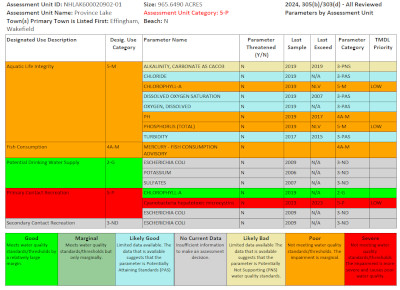
The total phosphorus concentrations over the years have been high enough to earn Province Lake a "Marginal Impairment" listing in the "Aquatic life" use category, ever since NHDES started issuing listings of impairments for phosphorus and chlorophyll-a in 2010. This was first explained in 2013's Issue #5 of the Province Lake Water Newsletter. The 2020 report had the time and space to explain the whole business of Impairments, since there were no new data to analyze for that year. I tried to make it as readable as possible, so please have a look, if you need a review.
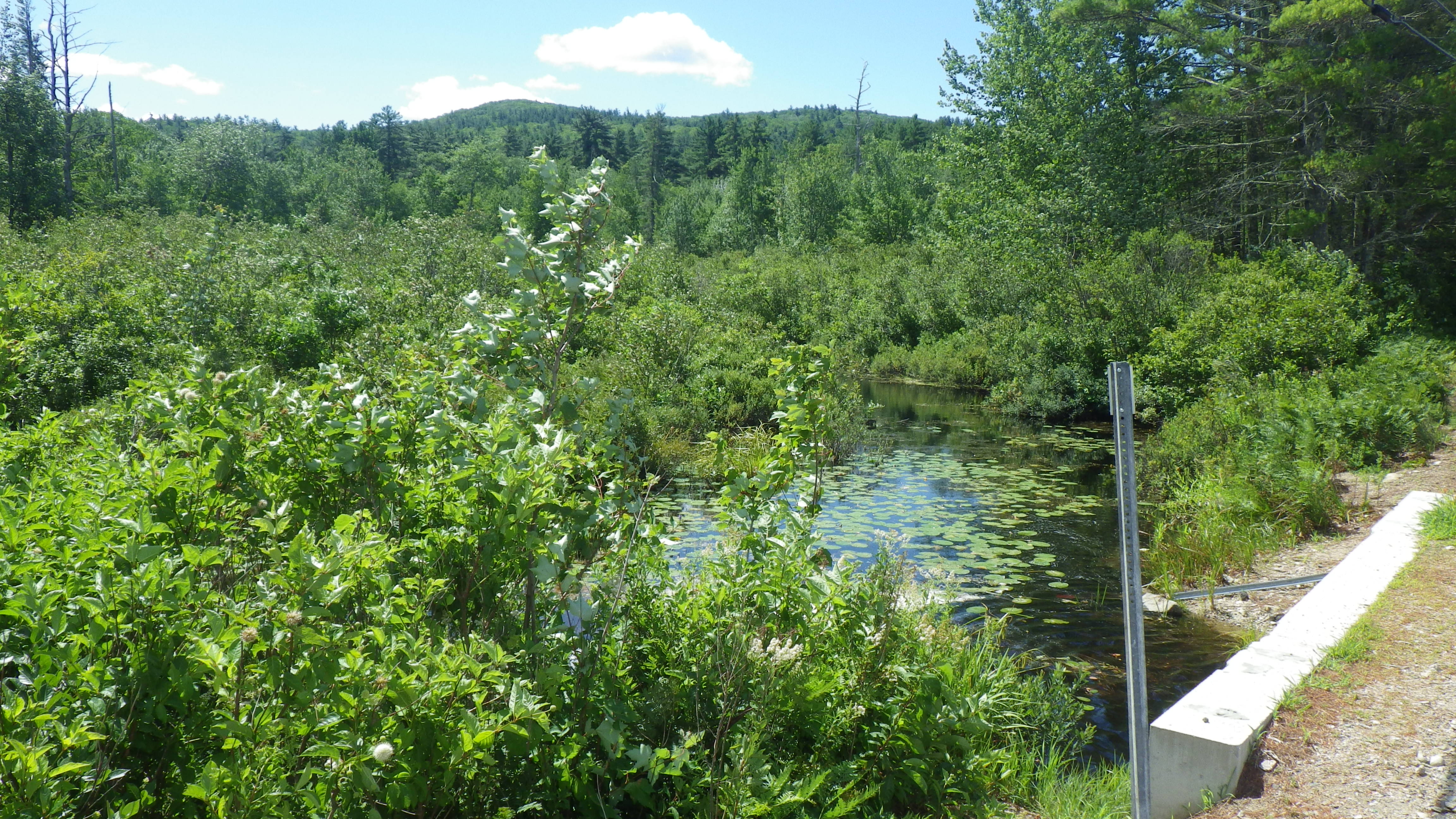
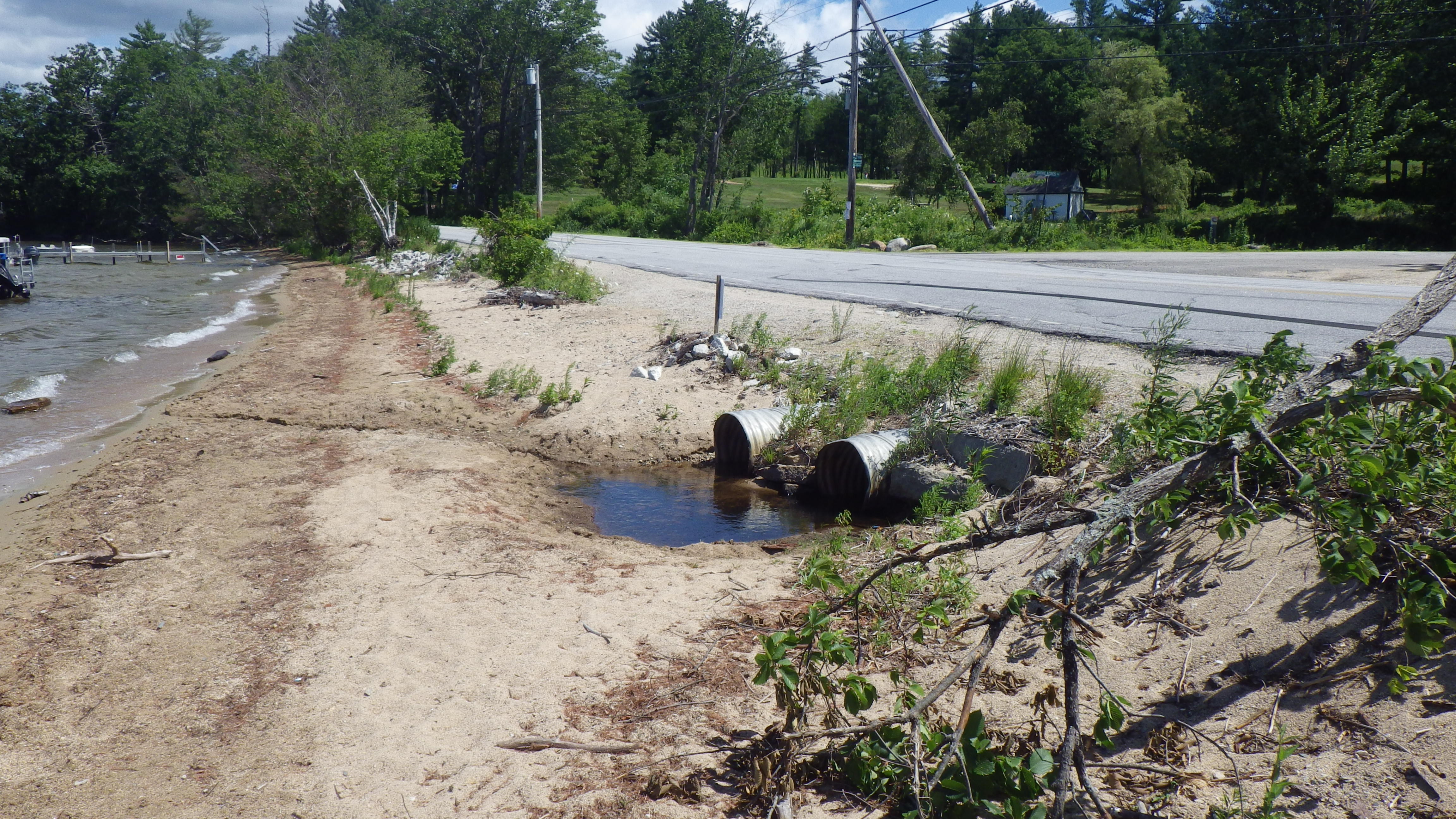
The phosphorus concentration at the Rt. 153 Inlet (in NH, near the state line), shown at right, decreased 27% from its 2024 level, to 17.8 µg/L. That made this the 3rd lowest concentration in 34 years of data, which is a good thing.
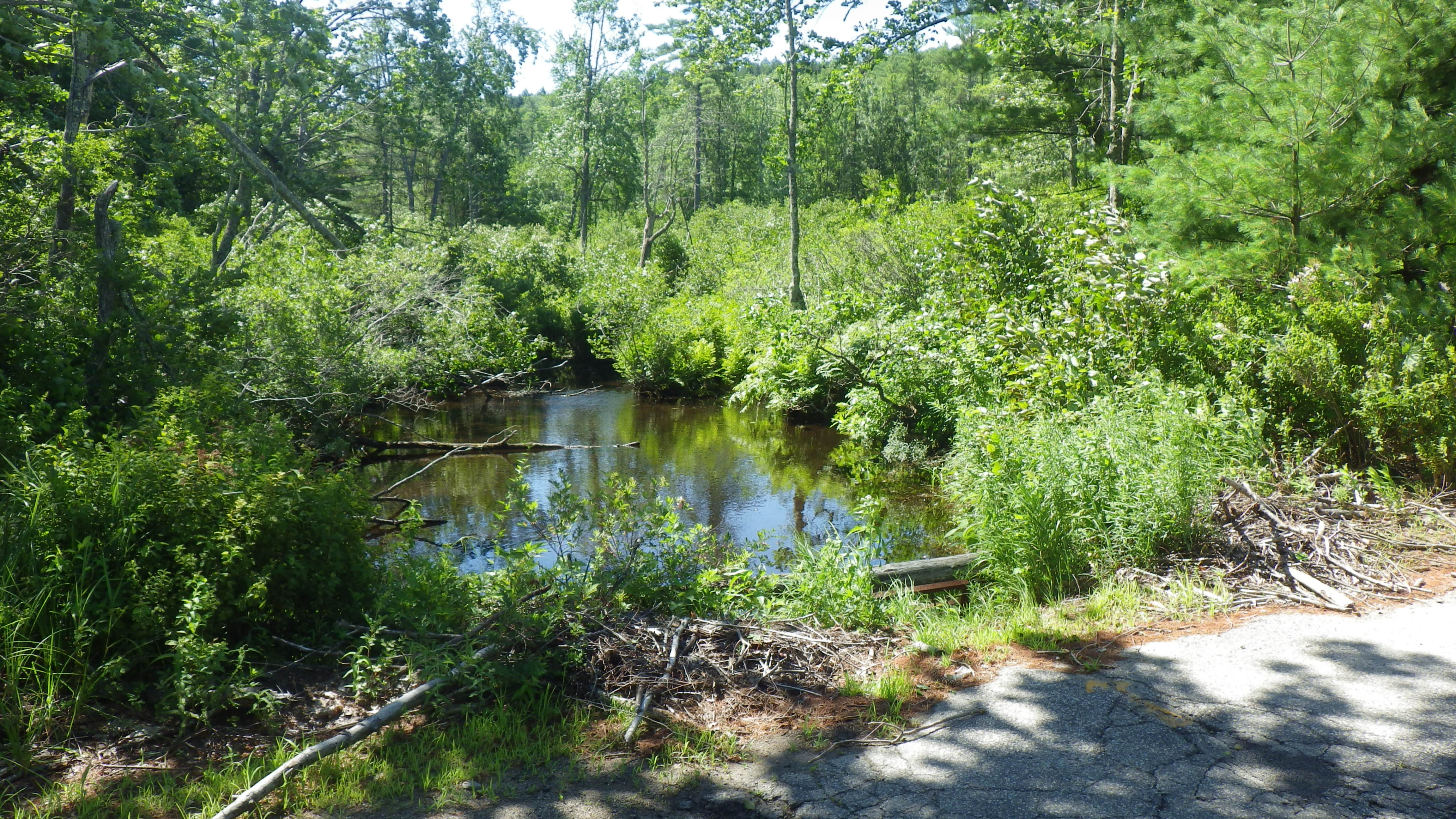
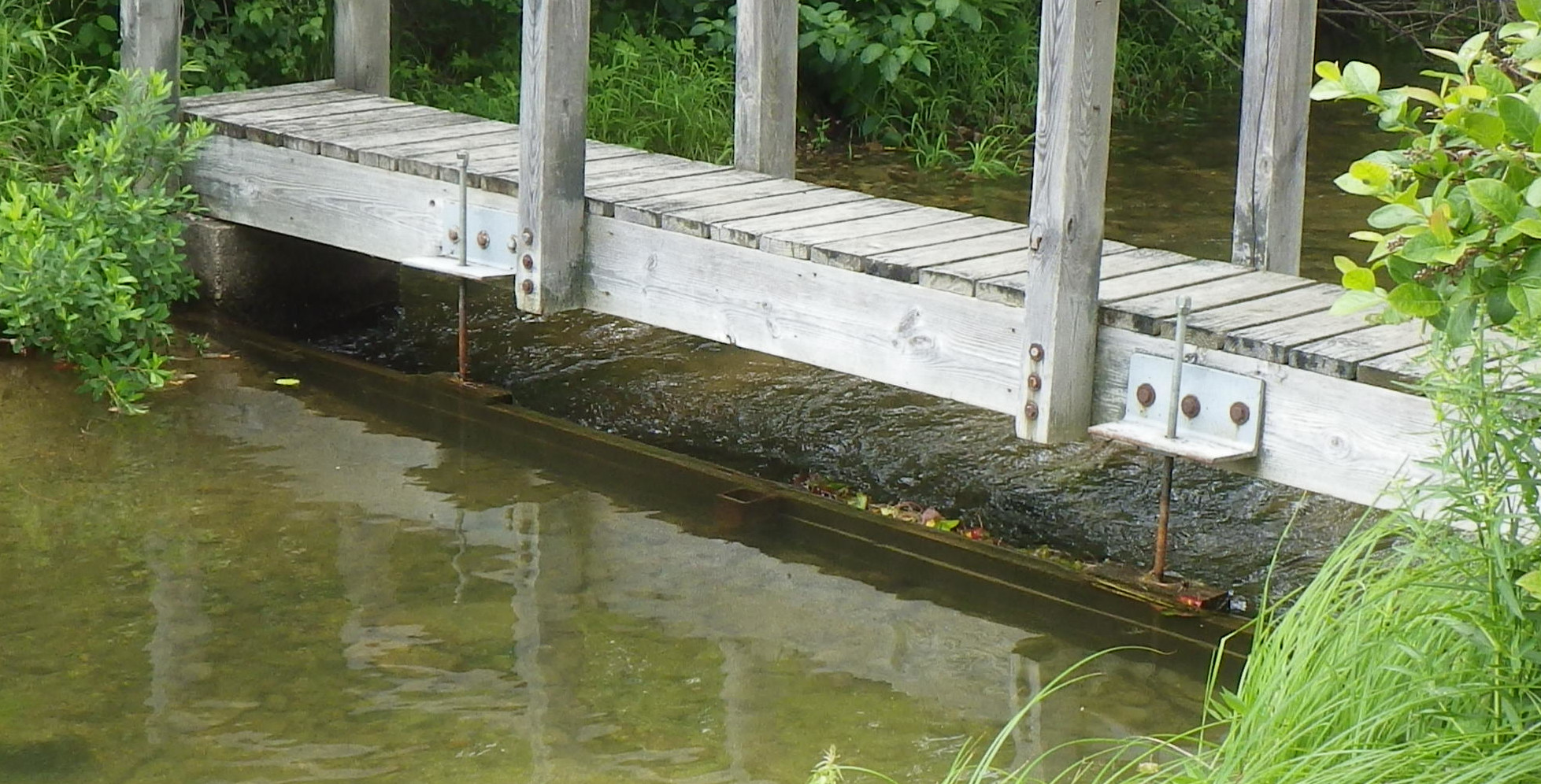
The average phosphorus concentration measured at the Island Inlet on Bonnyman Road decreased 5% from 2024 to 22.1 µg/L, making this the 7th lowest concentration in 34 years of data. The inland side of the Island Inlet is shown here, at left. The sample is taken where the water flows into the culvert to pass under Bonnyman Road. Volunteers work to make sure this culvert does not stay dammed up by beavers, which could result in water flowing over the road surface.
These phosphorus results are contrary: while the deep spot concentrations are very high, the inlet concentrations are very low. I take this to mean that these two inlets are not the primary source of the lake phosphorus. Rather, the deep spot phosphorus concentration is internally generated by the disturbance of phosphorus-laden sediments. With the low lake level in 2025, the water was not as deep, therefore the sediments were at a shallower depth and more available for disturbance.
I can logically hypothesize that the recent introduction of wake boats is the cause of the high phosphorus, since those boats are not recommended to be used in water less than 20 feet deep, due to their disturbance of sediments. However, I have no actual data on the number of wake boats on Province Lake, when they arrived, or how much they are used in which parts of the lake, and I have no idea how to get such data. If there are no boats or they are rarely used, the hypothesis would be wrong, but it is the only explanation I have right now.

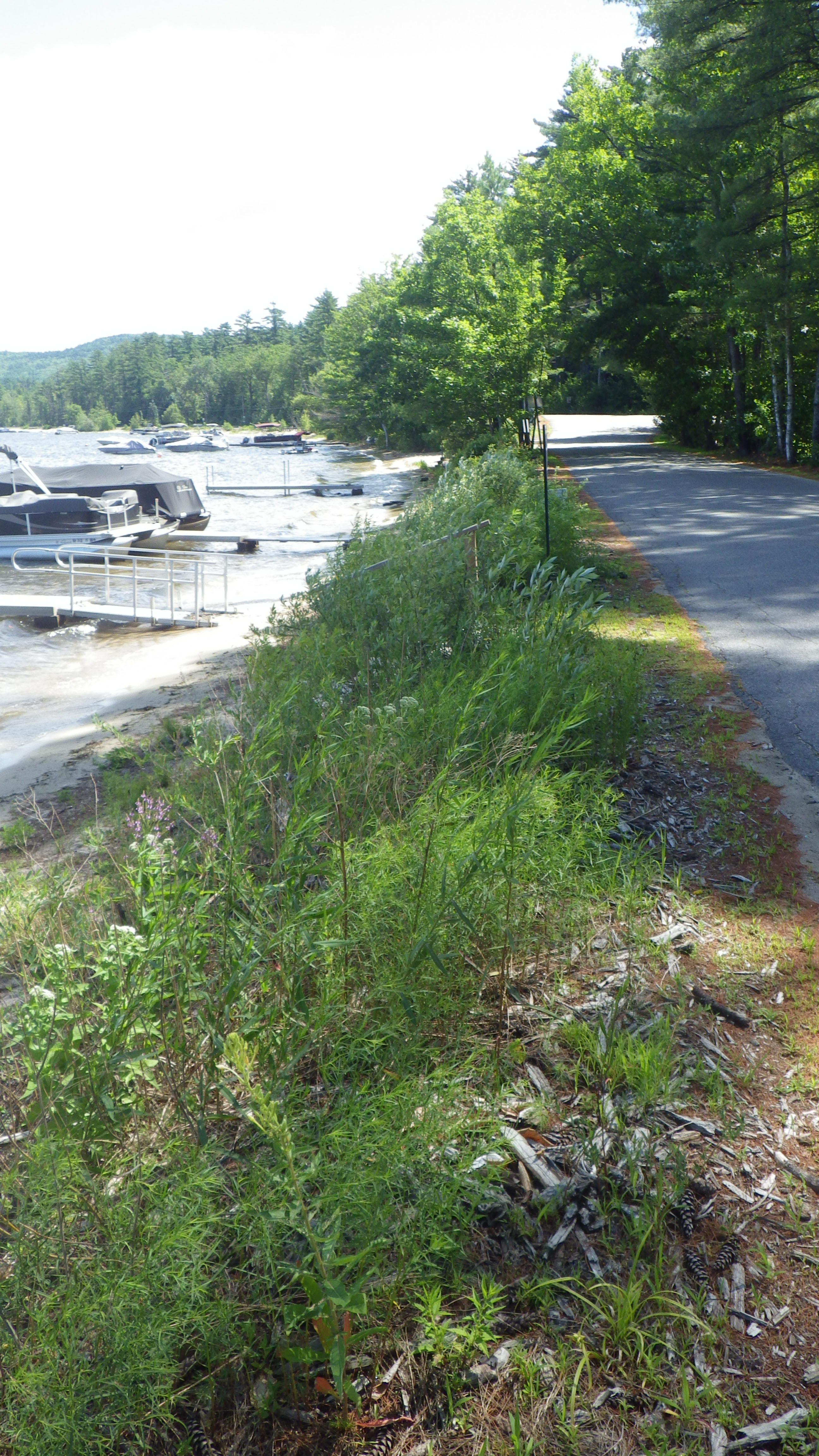
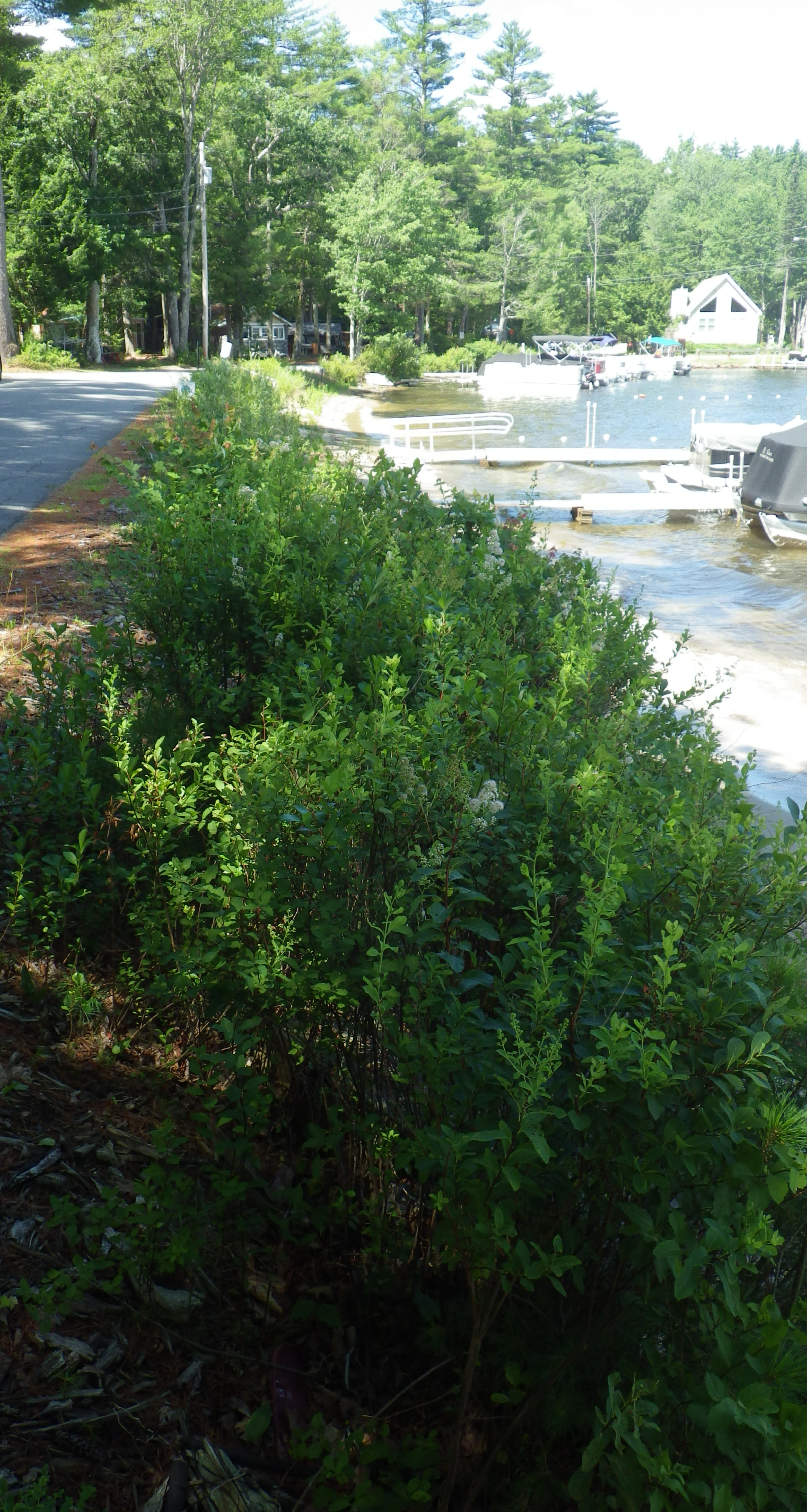
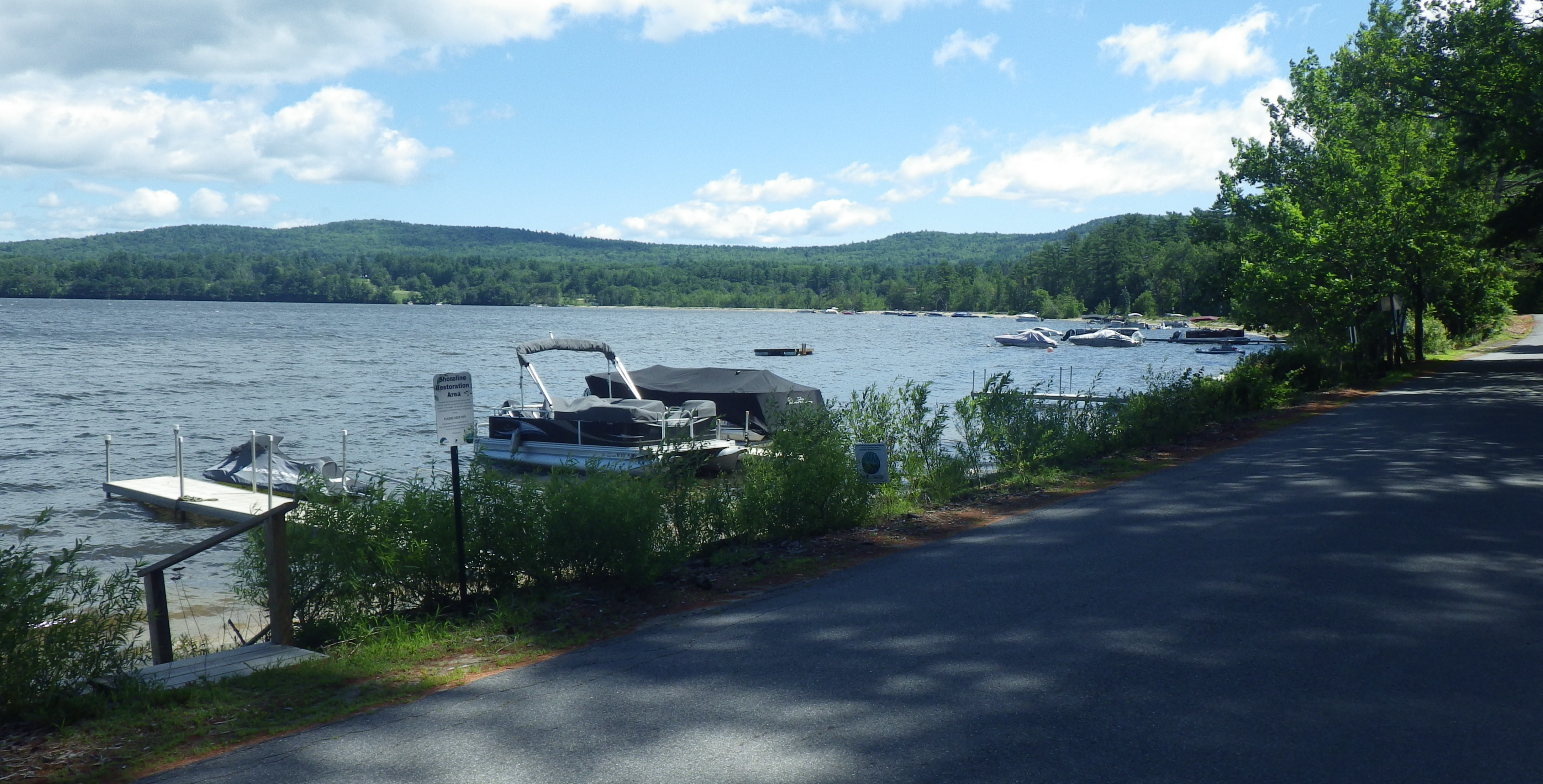
It is important to educate lake users on the importance of operating jet skis and boats at minimum headway speed in shallow areas to minimize disturbance to sediments and vegetation. Also, the maximum depth of Province Lake is about 16-17 feet, so Province Lake is simply the wrong place to try to use a wake boat. Pounding the shoreline with excessive wakes or churning up the bottom sediments releases phosphorus, which promotes algae, weed, and cyanobacteria growth; increases turbidity (scattering of light by suspended particles); and decreases clarity.
4. Chlorophyll-a versus Phosphorus
See the 2018 report for a statistical analysis of the relationship between Chlorophyll-a and Phosphorus. That analysis concluded that variation in the phosphorus concentrations in the upper layers accounted for only about 10% of the variations in chlorophyll-a. This is consistent with the observation that while phosphorus stayed steady (but high) in 2025, chlorophyll-a and cyanobacteria increased significantly.
5. Nitrogen
We had never sampled Province Lake for nitrogen as part of VLAP, but it is included in the UNH Lakes Lay Monitoring Program. Now that nitrogen is being monitored, we have the potential to eventually correlate nitrogen levels with algae growth, as measured by chlorophyll-a. At least 10 years of data are required before a meaningful statistical analysis can be performed. Meanwhile, it would be best not to use nitrogen-containing fertilizers near the shoreline, or streams or ditches feeding the lake, and to be sure septic systems are operating properly. It would also be a tiny help not to pee in the lake while swimming; each time adds about 40 milligrams of nitrogen to the water.
If you have a lush, bright green lawn, it could be a sign to your neighbors and the community that you are fertilizing your lawn, possibly making a significant contribution of nitrogen and/or phosphorus to the lake. On the other hand, if you pump water directly out of the lake to irrigate your lawn, you can contribute to improving the lake water quality by removing nutrients from the water and putting them to use on your lawn.
6. Stormwater Sampling
A welcome addition to the 2025 sampling season was a stormwater sampling event performed on 9/25/2025. The nearest CoCoRaHS station reporting daily precipitation data for the relevant dates was Station NH-CR-3 in Brookfield, NH. It indicated that 0.06” of rain fell in the 25 hours ending at 7 AM on 9/24, another 0.32” fell by 9 AM on 9/25, then another 1.75” fell by 7AM on 9/26. My own instrumentation at NH-CR-52 measured a total of 1.37” for the period and that rain started at 1:40 PM on 9/23 and ended about 11 PM on 9/25, therefore, we know that this extended period of rain affected Province Lake, although Brookfield got more rain.
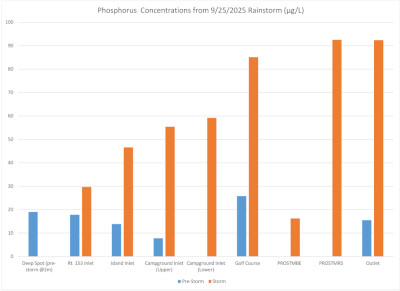
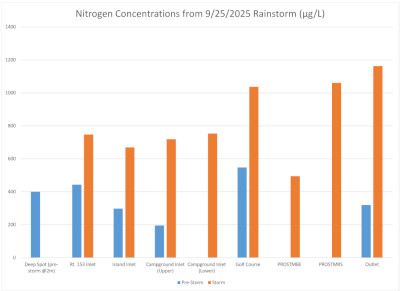
Examining the following graphs of phosphorus and nitrogen concentrations is the best way to visualize how important stormwater is with respect to addition of nutrients to the lake. Click them to see them full size. These are the components of the graphs:
| 1 | Deep Spot: June-Sept. averages at 2 meters depth BEFORE the storm event only, for reference |
| 2 | Rt. 153 Inlet: June-Sept. averages before the storm event VS the 9/25/2025 storm |
| 3 | Island Inlet: June-August averages before the storm event VS the 9/25/2025 storm |
| 4 | Campground Inlet (Upper): June- August averages before the storm event VS the 9/25/2025 storm. Sampling location is at the culvert under Remick Road before the stream flows through the campground. |
| 5 | Campground Inlet (Lower): 9/25/2025 storm ONLY. Sampling location is just before the stream flows into Province Lake after passing through the campground. |
| 6 | Golf Course: 6/9/2025 sample VS the 9/25/2025 storm |
| 7 | PROSTMBE: Location unknown. 9/25/2025 storm ONLY |
| 8 | PROSTMRS: Location unknown. 9/25/2025 storm ONLY |
| 9 | Outlet: June-August averages before the storm event VS the 9/25/2025 storm. |
Phosphorus
|
Nitrogen
|
It is striking how elevated the nutrient concentrations are during stormwater runoff. This illustrates how incredibly important are the efforts by the PLA and AWWA to reduce direct runoff into the lake, giving the water a chance to soak into the ground and be filtered by the soil.
The two Campground Inlet locations are not independent, but the separate samples show that the stream picks up additional phosphorus and nitrogen as it passes through the campground.


7. Cyanobacteria
Province Lake had several cyanobacteria events in 2025, as reported by the NHDES and PLA via their emails. I believe the severe bloom from August 8 to September 23 was possibly the worst in living memory.
| Bloom or Email Dates | Cyanobacteria Bloom Alert Email Excerpts * |
|---|---|
| 6/3/2025 |
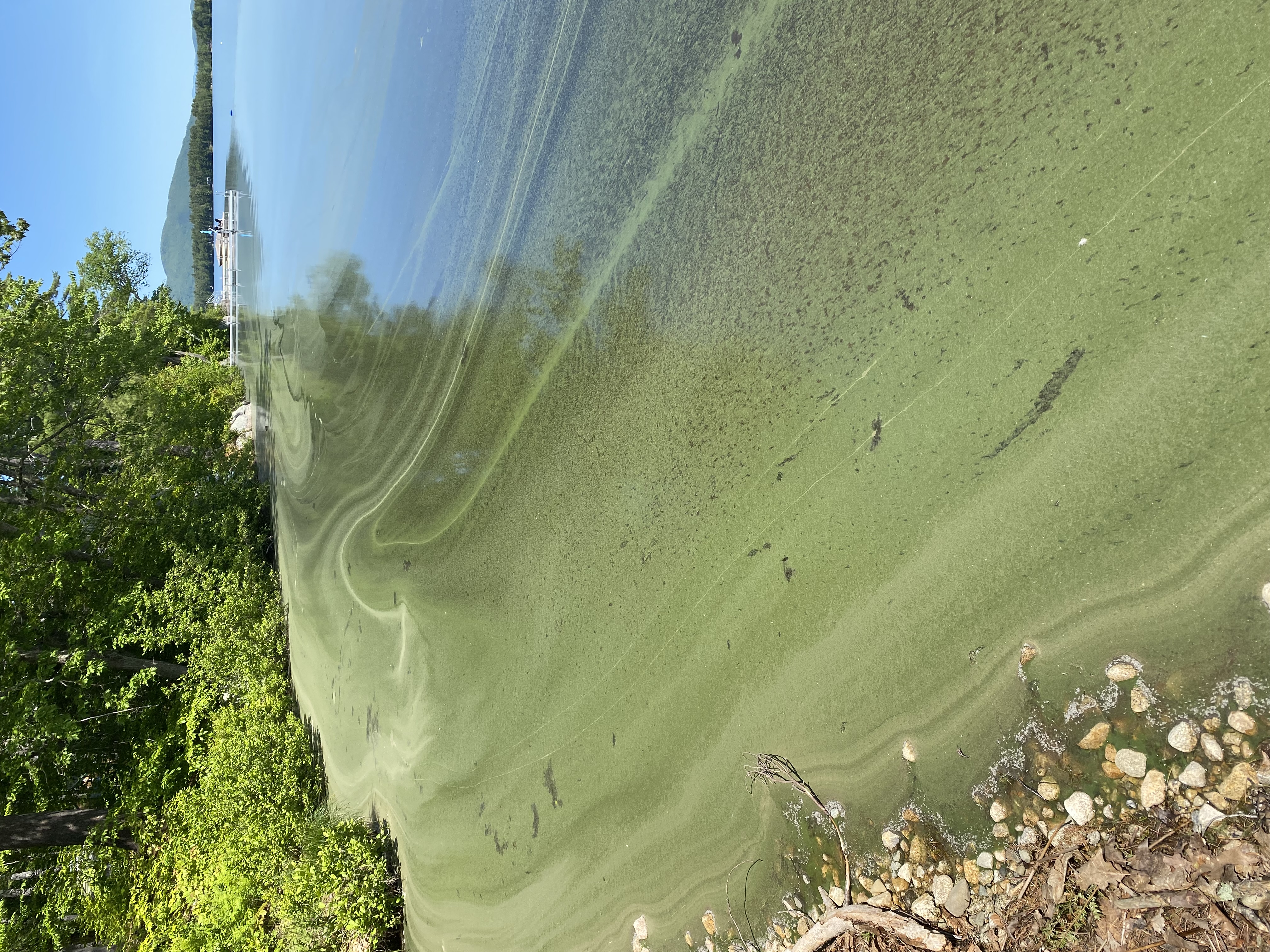
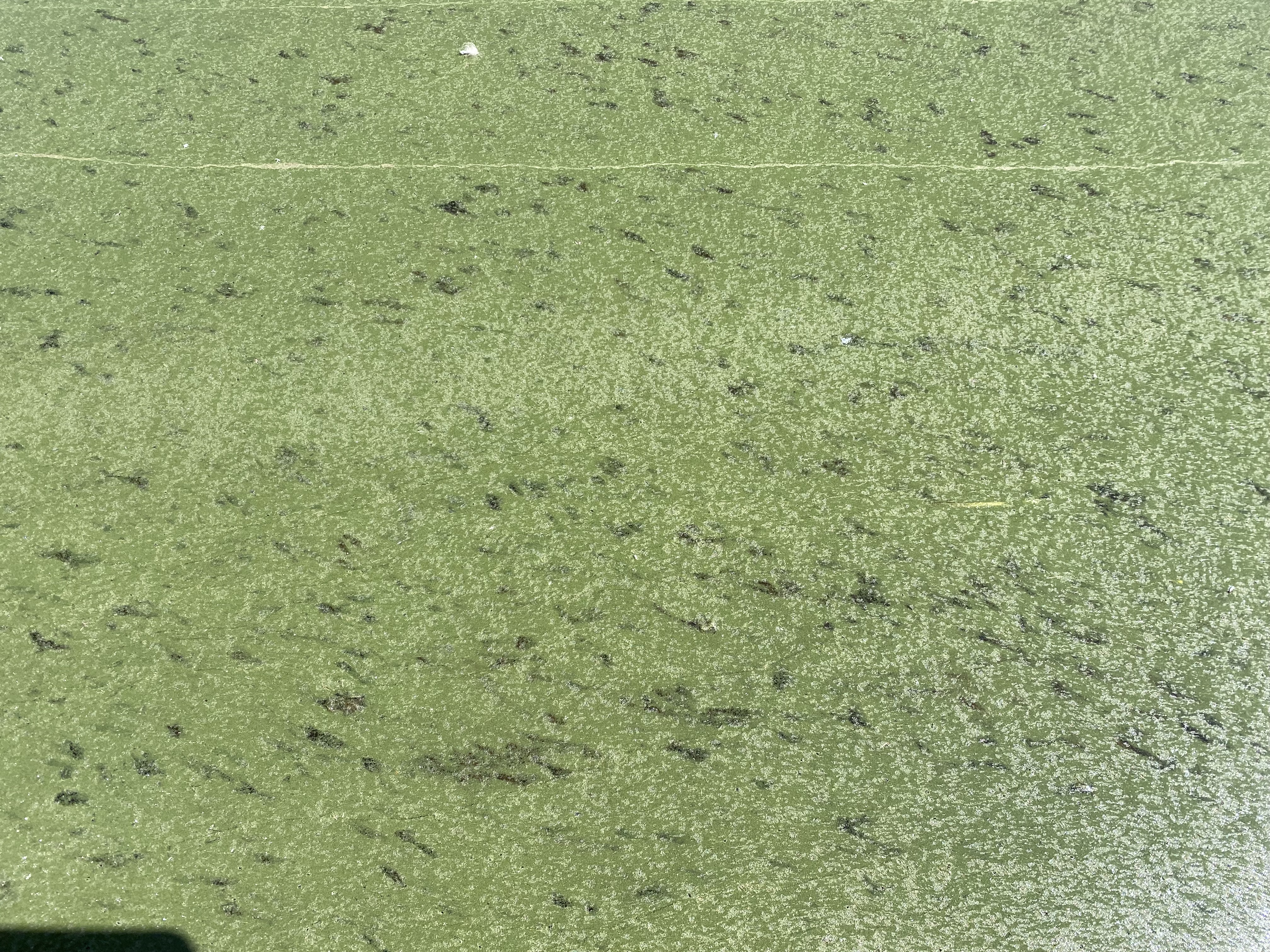
"Light green surface streaks and ribbons of material accumulating along the shoreline" "This report is based upon a photo of a potential cyanobacteria bloom and was observed near Ames Park." These photos were included in the email. |
| 6/6/2025 |
DES: "WATCH" Cyanobacteria Taxa = Dolichospermum "Samples were collected on 6/4 and mixed heavily with pollen. " "Ames Park: 118,800 cells/mL, Boat Launch: 174,800 cells/mL" NORM'S COMMENT: This is a good reminder that just because there may be lots of pollen on the lake, that does not mean that what looks like a bloom must only be pollen. I have seen people post potential bloom photos on Facebook and have others yell that it is only pollen. |
| 6/24/2025 |
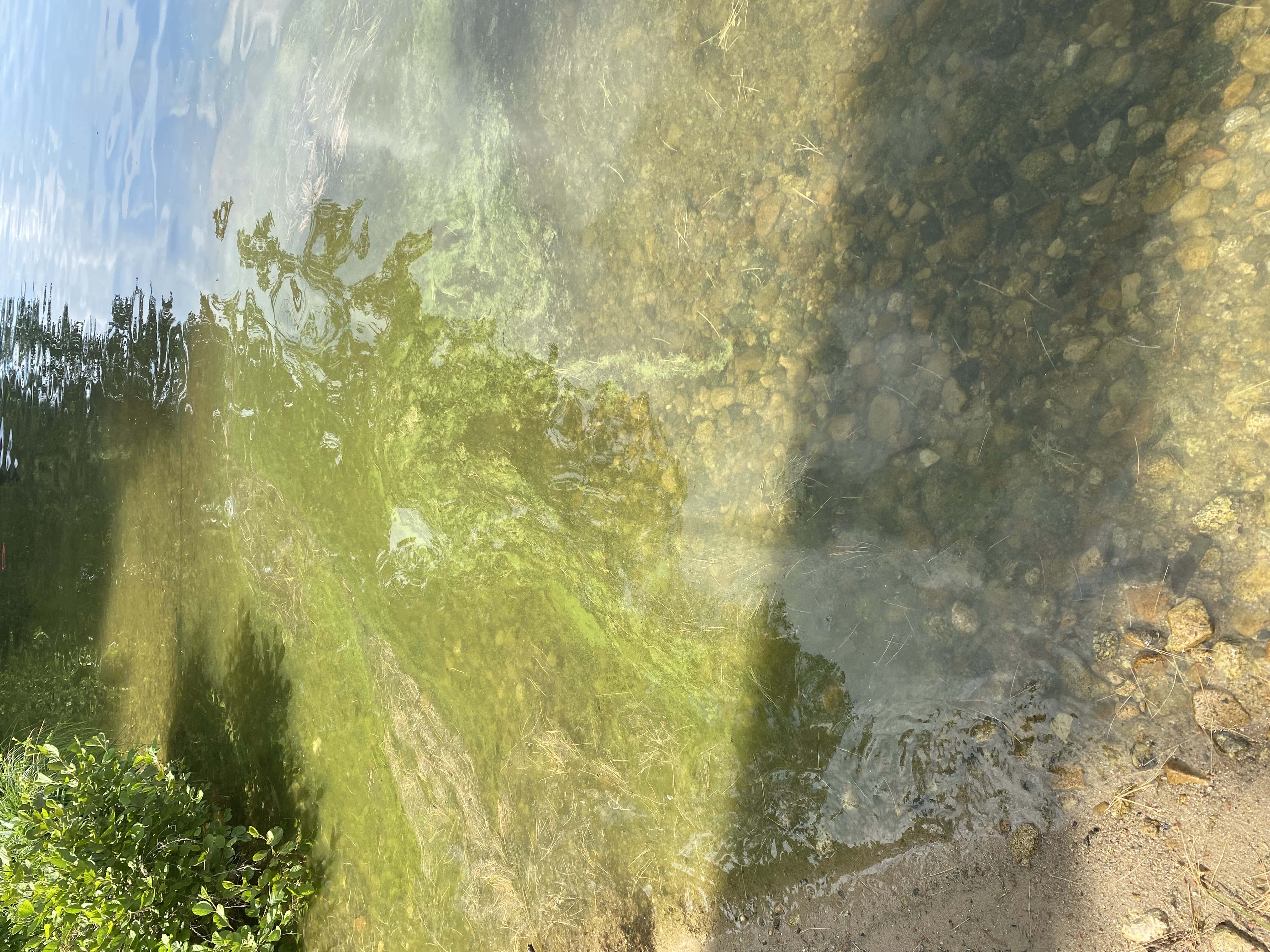
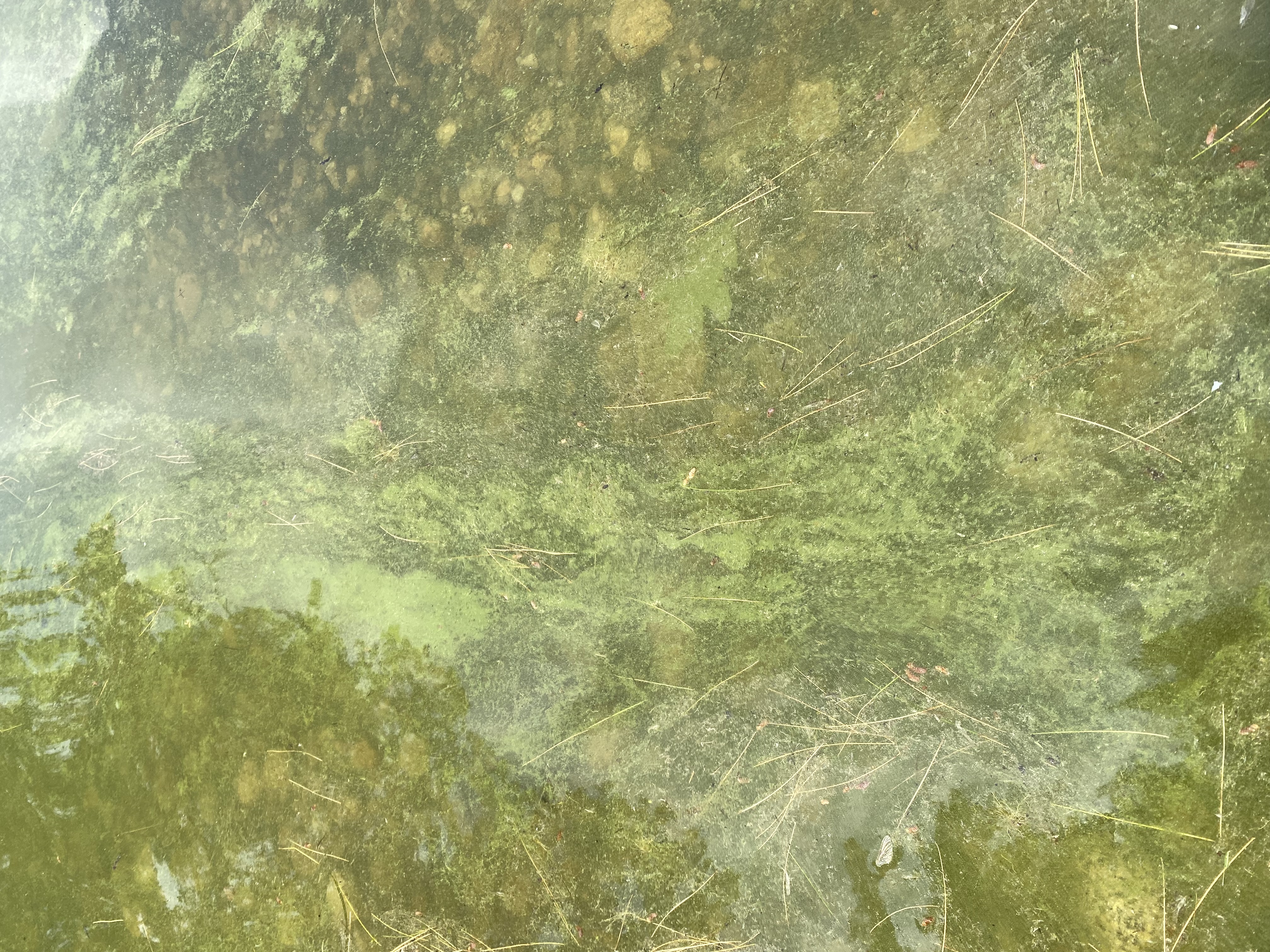
"Green surface streaks accumulating near the shoreline" "Bloom conditions first appeared in the afternoon of 6/23 near Ames Park. This report is based on a photo and not sample analysis." These photos were included in the email. |
| 8/8/2025 |
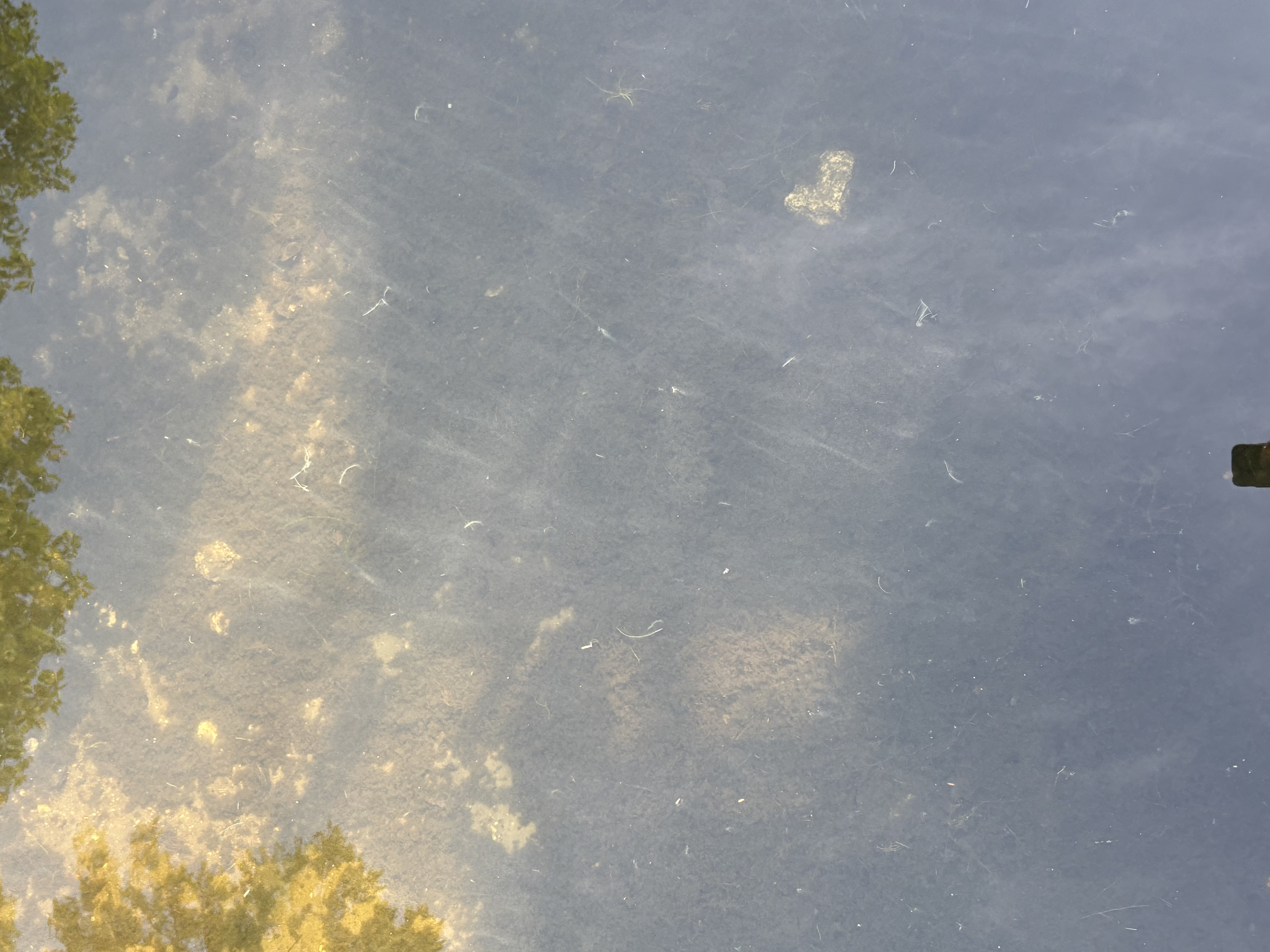
"Light green clouds of material accumulating along the surface." "Bloom conditions were observed today (8/8) and may develop further over the weekend. No samples have been collected." This photo was included in the email. |
| 8/13/2025 |
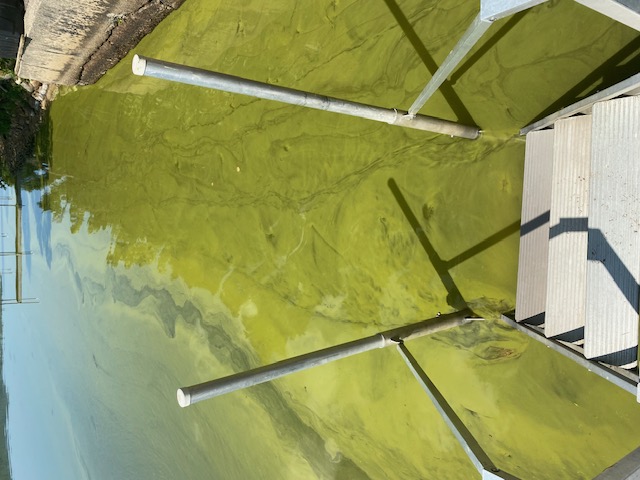
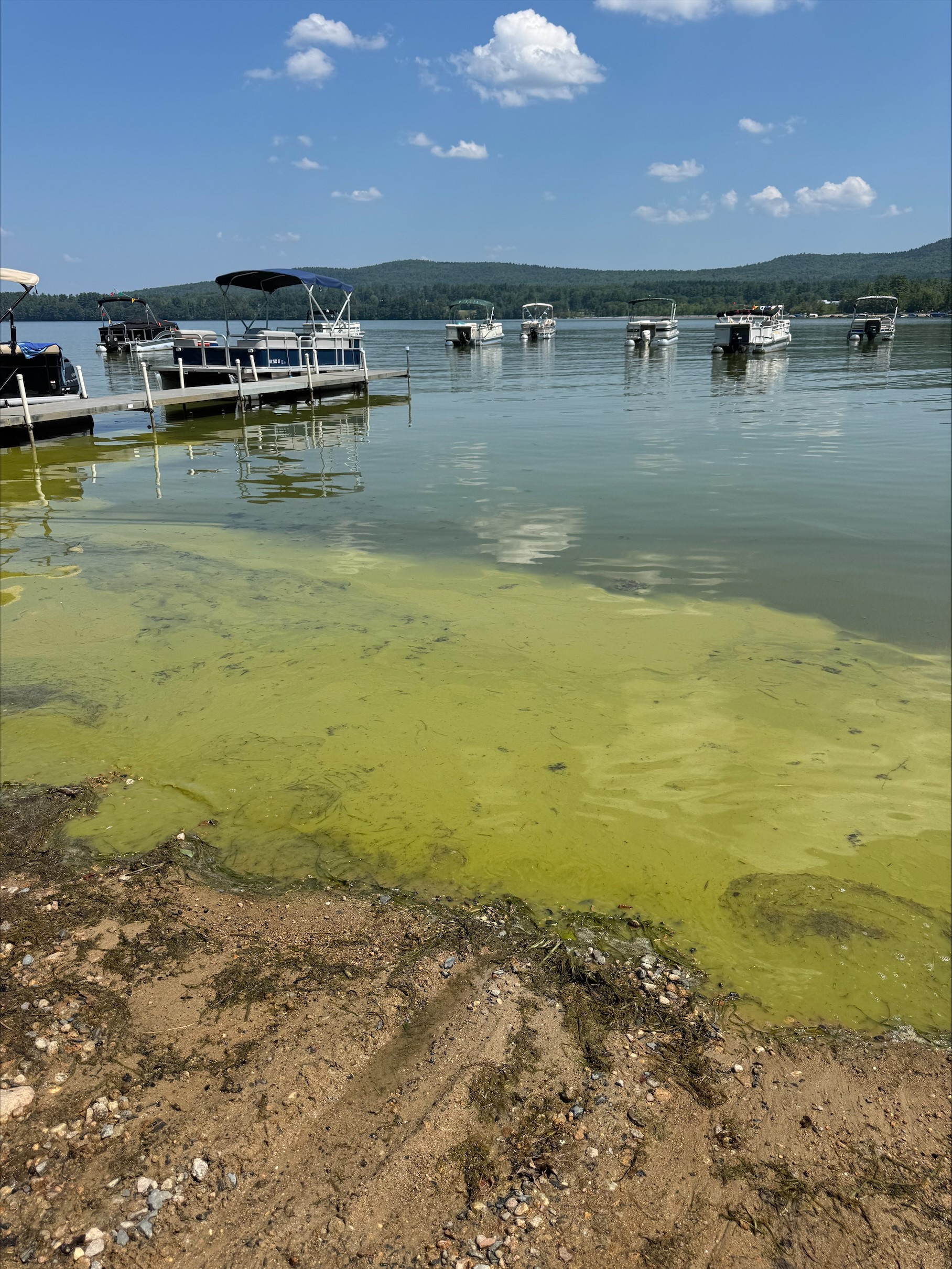
"Green surface scums accumulating along the shorelines." "Minor bloom conditions were first observed on 8/8 but developed into a more severe bloom over the weekend. NHDES staff collected multiple samples from around the waterbody on 8/12 that had cyanobacteria present at densities too numerous to count. " These photos were included in the email. |
| 8/22/2025 |
DES: "WARNING REMAINS" Cyanobacteria Taxa = Dolichospermum "NHDES continued to observe bloom conditions during the resampling event on 8/21. Multiple samples were collected around the waterbody, with the cyanobacteria cell density ranging from 71,800 – 1,920,000 cells/mL." |
| 8/28/2025 |
DES: "WARNING REMAINS" Cyanobacteria Taxa = Dolichospermum "NHDES continued to observe bloom conditions during the resampling event on 8/27. Multiple samples were collected around the waterbody, with the cyanobacteria cell density ranging from 50,400 – 656,000 cells/mL." |
| 9/4/2025 |
DES: "WARNING REMAINS" Cyanobacteria Taxa = Dolichospermum "NHDES continued to observe bloom conditions during the resampling event on 9/3. Multiple samples were collected around the waterbody, with the cyanobacteria cell density at levels too numerous to count." |
| 9/10/2025 |
DES: "WARNING REMAINS" Cyanobacteria Taxa = Dolichospermum "NHDES continued to observe bloom conditions during the resampling event on 9/9. Conditions have improved slightly however multiple samples were still collected with a cyanobacteria cell density at levels too numerous to count." |
| 9/23/2025 |
DES: "WARNING REMOVED" "There have been no reports of bloom conditions. Additionally, NHDES staff visited Province Lake on 9/22/25 and no bloom conditions were observed. There were very low levels of cyanobacteria present in three samples that were collected, which are representative of background levels. " |
* Please note that you can subscribe to get these emails directly from NHDES, so that you do not need to wait for the PLA to forward them to you. Sign up HERE.
The following are iNaturalist observations I submitted of the severe bloom, which allow you to see the progression as it aged. You can almost smell it!
|
Province Lake had experienced its first confirmed cyanobacteria bloom since the 1970's in September 2010, then had blooms 4 years in a row (2010-2013). Fortunately, no sightings worthy of a Lake Warning (in some years called an "Advisory") then occurred from 2014 through 2017. Generally, more frequent blooms have occurred from 2021 onward. See the official NHDES Cyanobacteria Bloom History, which lists official actions and may not capture all blooms that were actually observed by people around the lake.

The continuing blooms mean we are susceptible to having them in future years. When a cyanobacteria bloom is in progress (see description below), there is no way for us to know if it is toxic or not, so we need to act as if it were toxic. Therefore, it is important to know what a bloom looks like and act accordingly. If a cyanobacteria bloom is suspected, there may be Facebook postings and/or NHDES or PLA email alerts issued. For your convenience, in 2023 I added a new "Cyanobacteria Bloom Status" page that will link you to the "Healthy Swimming Mapper", where you can check on the official cyanobacteria bloom status, as posted and updated daily by NHDES. That page can also be found under the "Facts & Photos" tab.
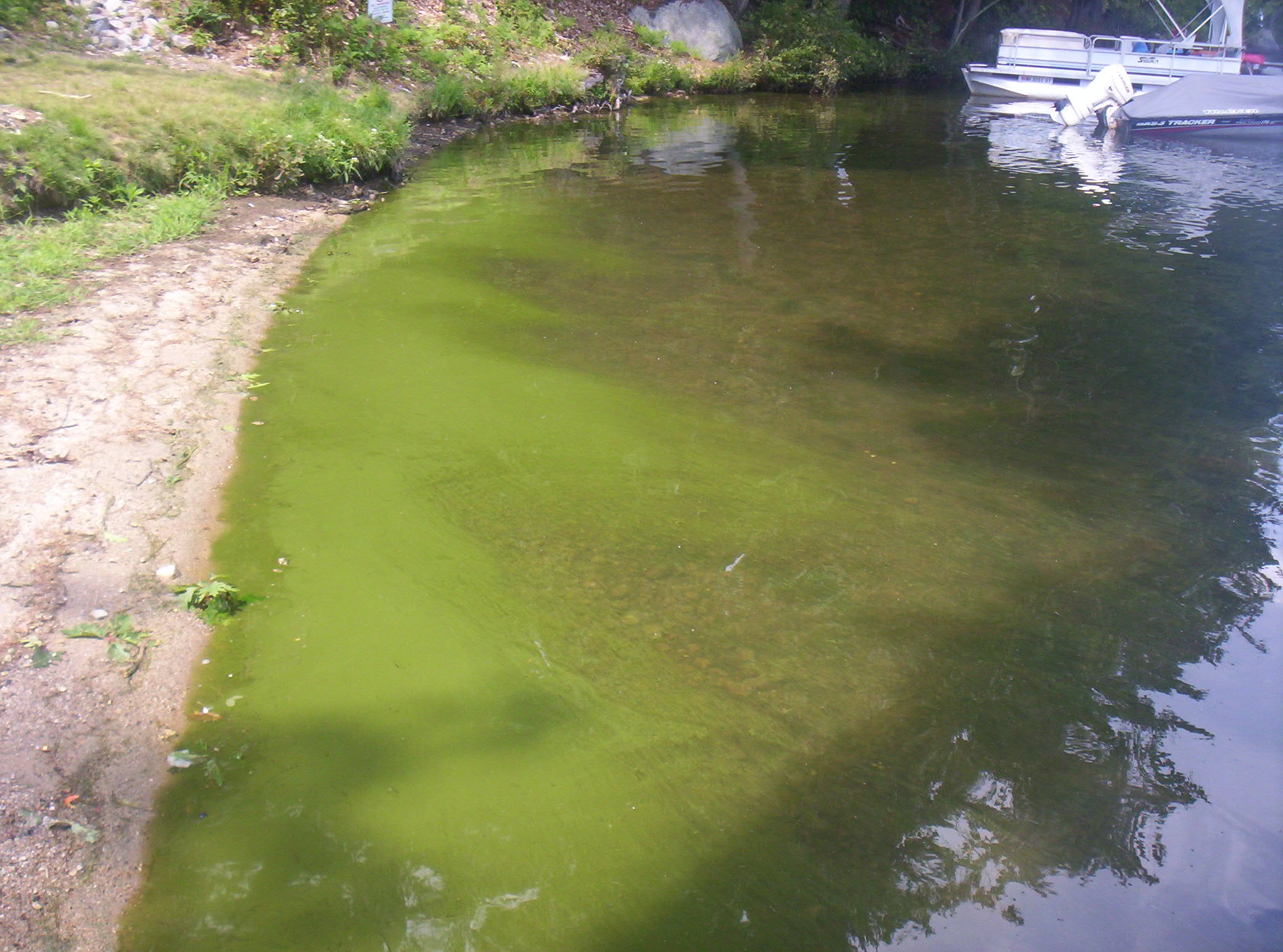
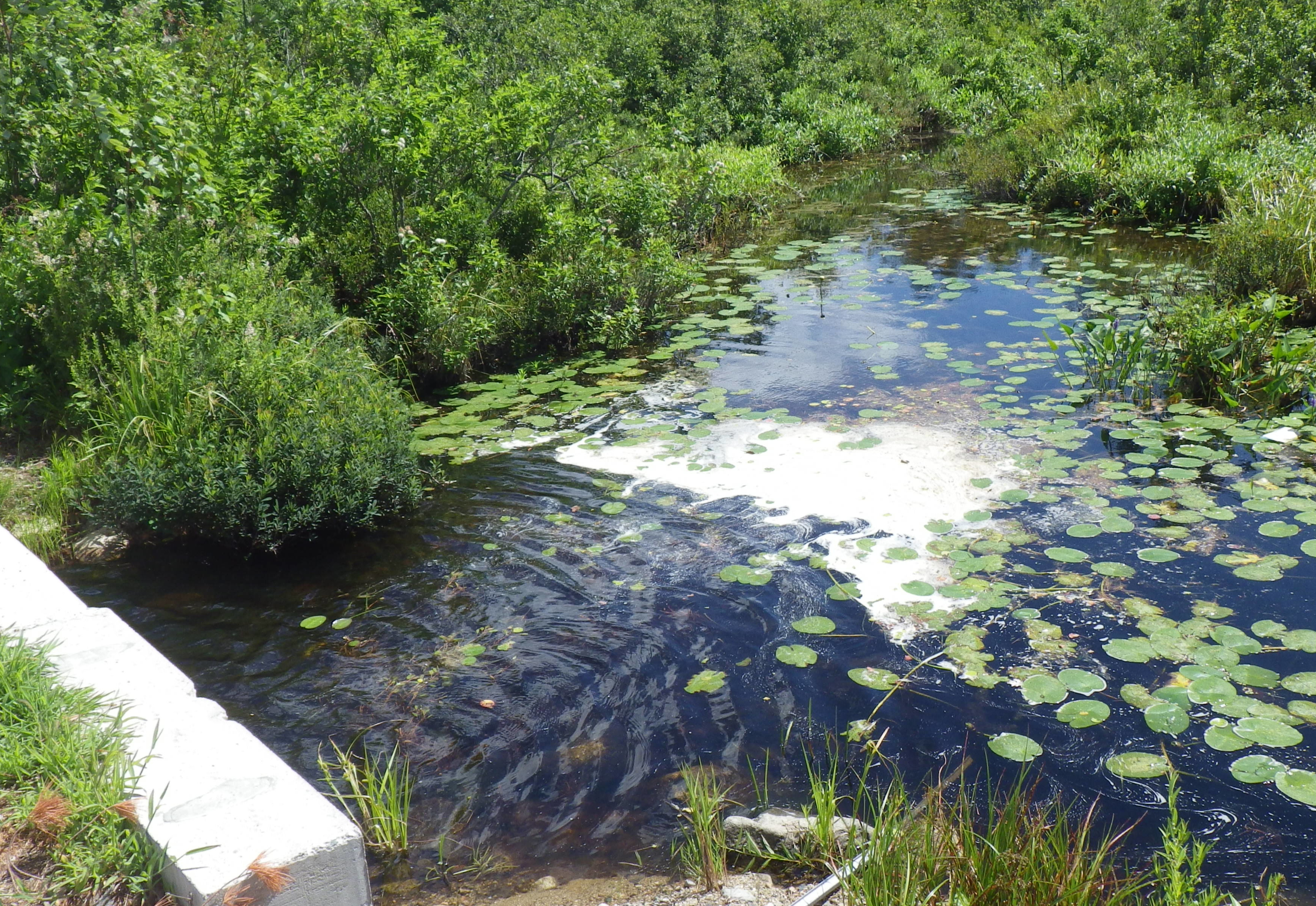
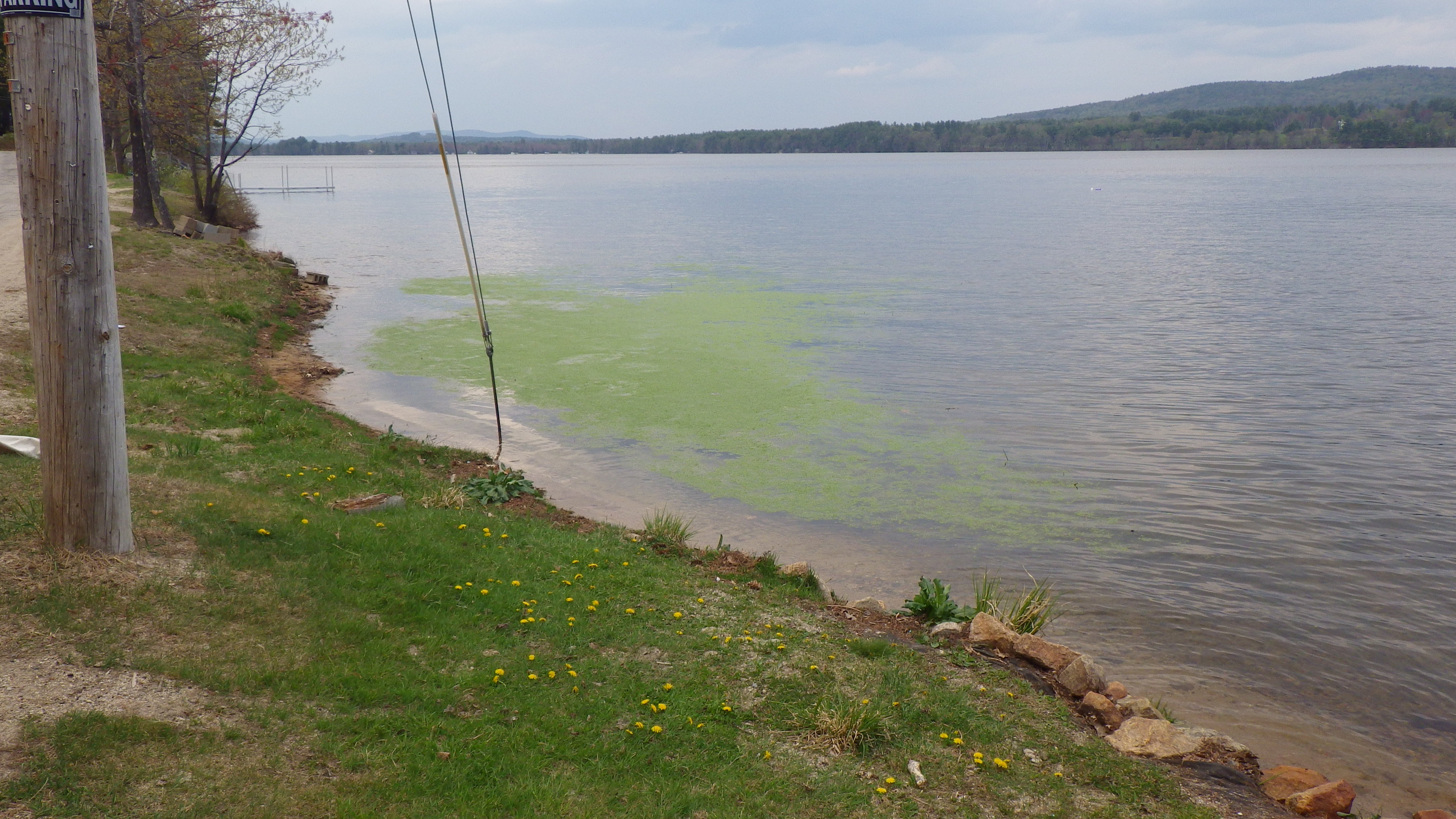
What a Cyanobacteria Bloom Looks Like: Large concentrations of cyanobacteria (a bloom) would be seen as a green, blue, or pink surface scum in a section of the lake. This is different from the tan or yellowish foam seen sometimes after strong winds. I took the photo at right on 7/21/2025 just inside the Rt. 153 Inlet while fierce winds were blowing in from the lake, making harmless foam that was accumulating here in this calm area. If present in large amounts, cyanobacteria can be toxic to animals and humans. While recreational exposure to cyanobacteria toxins is a major concern of NHDES, few cases of cyanotoxin-related illness in New Hampshire are serious enough to be reported or become well known. (See the 2020 report for details.) A guest NHDES speaker at the 2024 PLA meeting told me after the meeting that she personally had been sick for a week after a known exposure and knew people who had exposed dogs get seriously ill. I myself developed an unusual face rash just one time that required treatment with Ivermectin cream to finally clear it. Minor exposure to cyanobacteria was the only reason that made any sense, but the true cause was never proven. [Left photo by NHDES, courtesy of the PLA, 2012.]
If you think you are seeing a cyanobacteria bloom, stay out of the water and especially, keep your children and pets out of the water. Call or text the NHDES Cyanobacteria Hotline at (603) 848-8094 or email HAB@des.nh.gov or submit a Bloom Report Form to describe what you see. Then call the PLA's phone number, (207) 200-3243, so a sample can be promptly collected. NH DES may analyze the suspected bloom, then post a Warning online if there is any danger. They will monitor the situation and remove the postings when all is clear.

There is a citizen science project of the US Environmental Protection Agency called BloomWatch that anyone can participate in using a smartphone or tablet. It is still active as of July 2026. You can learn about it and download the app at https://cyanos.org/bloomwatch/ Note that reports to BloomWatch are for citizen science purposes only and do NOT constitute a formal report to authorities, so you would still need to report blooms to NHDES and the PLA, as described above.
PLA Activity: The 2024 PLA annual meeting included guest speakers who are experts on ways to mitigate cyanobacteria blooms. Read more about that in the 2023 report. In addition, the PLA sent this message in an email dated 6/9/2025:

"This is just a quick note to let you all know that NHDES has created different signs for cyanobacteria this year. Unlike in the past when there were red warning signs, these signs are more educational in nature. You can see what they look like in the attached.
"We as a board have decided to just put the signs out and leave them up for the summer. We feel they are a good reminder to all, and especially folks visiting the lake that aren't as familiar with what cyanobacteria is. Should we have a watch or warning issued, we will still inform folks via email and our FB page, but let's hope we have few of these this year.
"The signs were put out on Sunday, please leave them where they are as they are a good reminder to all of us to Look, Check, and Report as NHDES is advising us."
8. Cyanobacteria and carbon dioxide
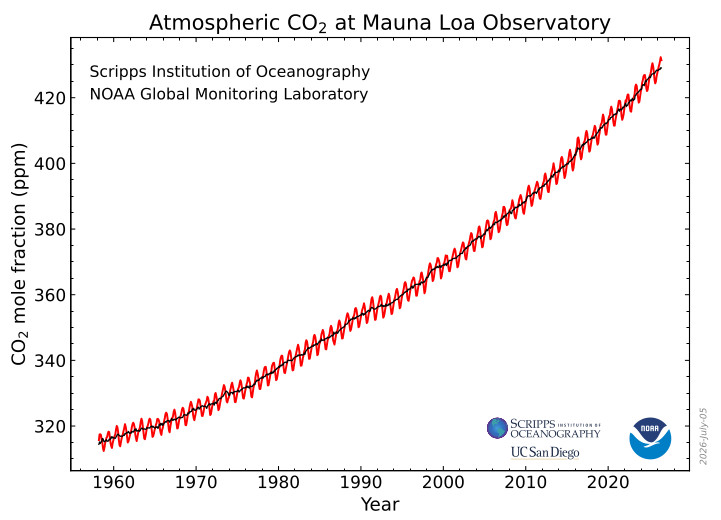
We all want to know why there are more and worse cyanobacteria blooms occurring at Province Lake and elsewhere. I thought about what is changing and realized that carbon dioxide (CO2) has been indisputably increasing for decades. I looked to see if there was any research published on the matter.
The paper "How rising CO2 and global warming may stimulate harmful cyanobacterial blooms" concludes that increased atmospheric CO2 concentration may directly stimulate blooms, since CO2 is what cyanobacteria use as food in the photosynthesis that powers their lives and growth. The other factors it mentions as stimulating growth are high temperatures and eutrophic conditions. It says "Models and lake studies indicate that the response of cyanobacterial growth to rising CO2 concentrations and elevated temperatures can be suppressed by nutrient limitation."
We cannot do anything locally to decrease the CO2 concentration or temperature, but it is encouraging that the paper suggests reducing phosphorus inputs, as is being attempted at Province Lake, is a useful response."
9. Acidity (pH)
A pH between 6.5 to 7.0 is ideal for fish, according to VLAP. pH is the measure of acidity, where 7.00 is neutral, below 7 is acidic, and above 7 is basic. In 2025, lab measurements averaged 7.07 in the upper layer and 7.00 in the lower layer, as opposed to 7.00 and 6.94, respectively, in 2024; 6.92 and 6.84, respectively, in 2023; and 6.76 and 6.74, respectively, in 2022. This showed a continuing trend of decreasing acidity during that period from the pH spike observed in 2021, which is a good thing. It is only since 2015 that we have had occasional average pHs of 7.00 or above in the upper and lower layers of the lake. The state average in the upper layer is 6.6.
Province Lake is still listed by NH DES as 4A-M, "Impaired – Marginally Poor" for pH, but this is based on old data and is no longer true in reality. However, getting it delisted is a long difficult process, as painstakingly detailed by Sally Soule of NHDES in 2013 . I believe there is simply no incentive or benefit for DES to work through the process, so we can expect that it will never happen. Meanwhile, we can just be happy that Province Lake is actually fine with respect to pH.
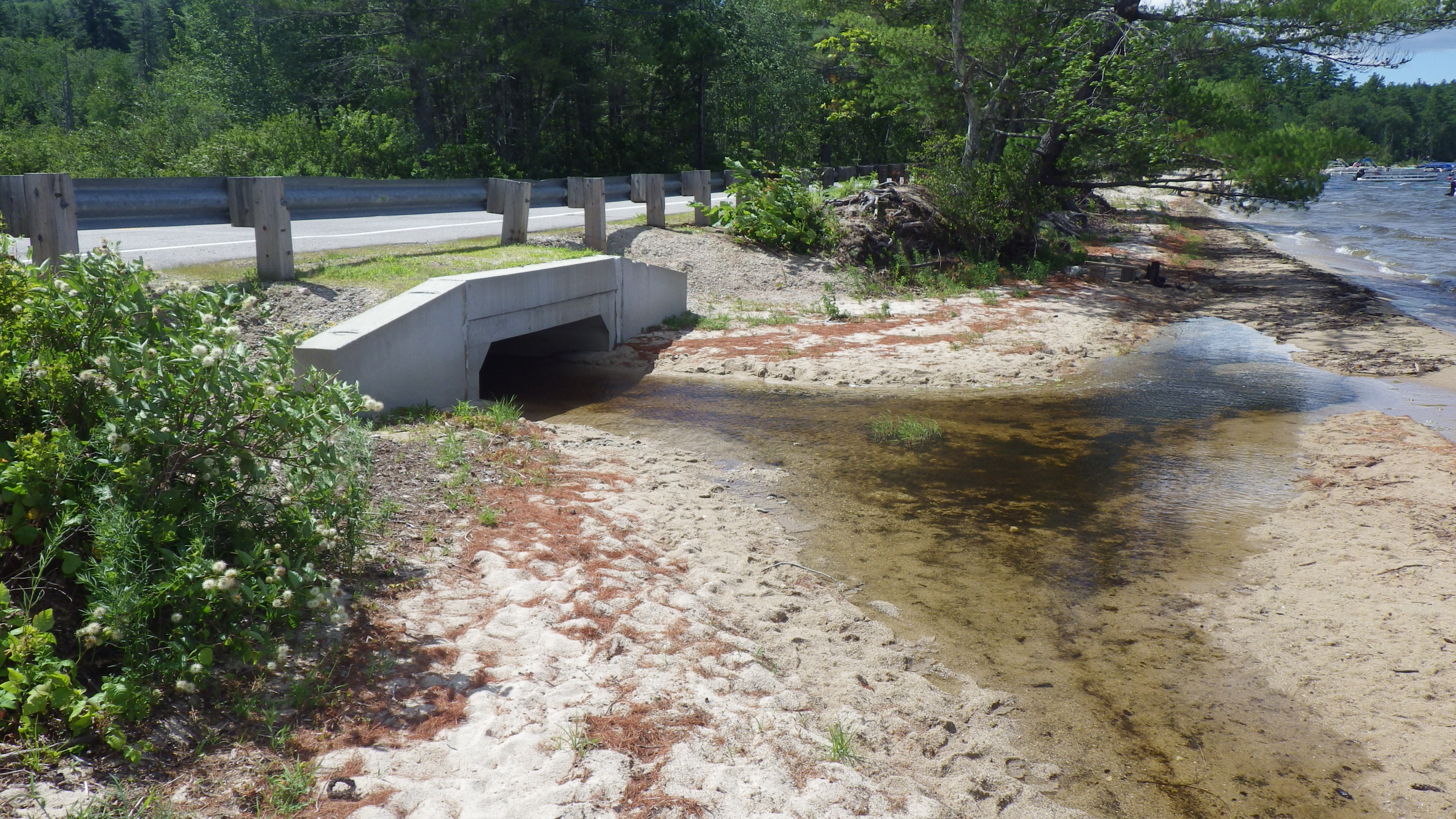
The average lab-measured pH at the Rt. 153 inlet was 6.54, slightly more acidic than the 6.61 in 2024. 2025's pH is now the 2nd least acidic in 34 years of data, which is presumably a good thing. This inlet drains a large wetland, which naturally has a high concentration of tannic, humic, and fulvic acids from decomposition of plant life, which give it the color of tea, as shown in the photo at left, and reduce its pH.
The average pH at the Island Inlet was 6.55, a bit more acidic than the 6.75 pH of 2024. It tied for the 8th least acidic average for this location in 34 years of data. This inlet also drains a wetland.
Exceedances of the Water Quality Criteria for pH are defined as: pH < 6.5 or pH > 8.0. The state average pH of 6.6 is barely better than the 6.5 criterion, therefore a large number of New Hampshire water bodies are listed as "Slight impairment - marginal condition" in the "Aquatic life" use category for pH.
10. Mercury in fish
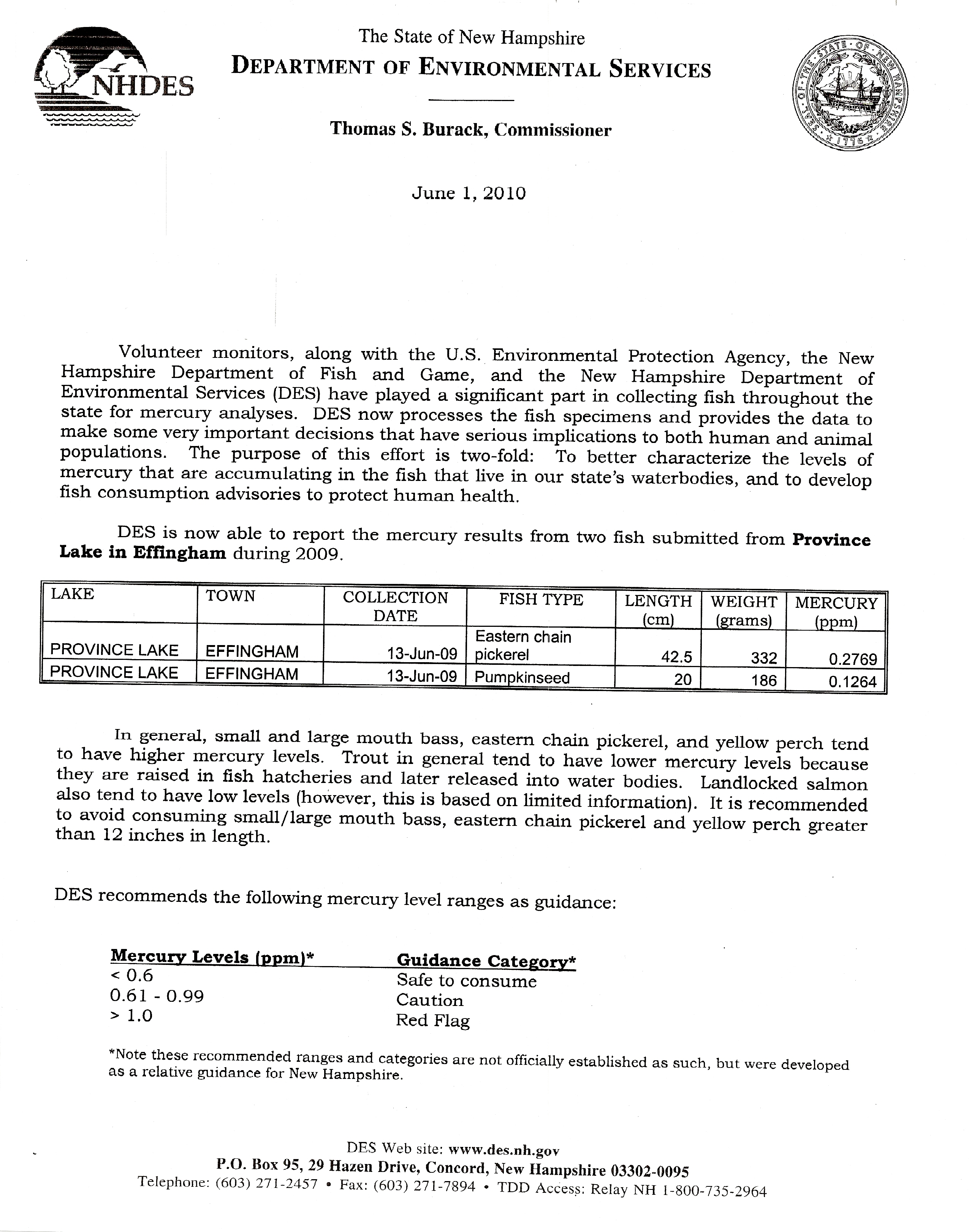
Province Lake was listed in 2008 as impaired for mercury in fish and it remains so with all other surface waters in New Hampshire (4). Two fish caught from Province Lake in 2009 were tested in 2010 and shown to have safe mercury levels, but just two fish cannot be assumed to be sufficiently representative of all fish in the lake, especially since 16 years have passed since those fish were caught. It's better to be cautious and do catch-and-release, which leaves more food for the loons and bald eagles.

In January 2023, NHDES reinitiated their Fish Tissue Mercury Monitoring Program. You can read more about it in the NH bulletin. Download a pdf of the details HERE. An important difference in this renewed program is that they want a minimum of 5 individuals in the target size range of the primary species of interest [Yellow Perch (shown at right)(6 – 12 in.), Largemouth Bass (10 – 16 in.), or Smallmouth Bass (10 – 16 in.)]. There is also a list of secondary interest, for which a single individual can be submitted for analysis. Since the fish need to be frozen and hand-delivered to Concord, this would be a perfect citizen science project for a group of anglers on the lake to organize among themselves, in order to do a single delivery run to Concord. The PLA could coordinate this effort, as they did in 2009.
I heard a rumor that this was done on Province Lake via ice fishing this past winter. Please let me know if you know something about it and especially send me any results, so they can be shared with the community.
11. Dissolved oxygen
No dissolved oxygen (DO) data were provided by UNH for 2025. A high oxygen level is a sign of the lake’s overall good health. Given Province Lake's large area and shallow depth, it tends to be well-aerated by wind and boats, so the lack of data for one year does not concern me. I encourage powered watercraft to operate fast far from the shore to mix the waters and boost the oxygen concentration, while minimizing their use in the shallows. Unlike wake boats, regular power boats can mix the waters without stirring up the phosphorus laden sediments, because their disturbance does not reach as deep.
12. E. coli bacteria
Much E. coli bacteria testing was done in 2013 as part of the study for the Province Lake Watershed Management Plan (see the 2013 supplementary report). Despite some very localized problems with E. coli bacteria in 2013, no E. coli sampling has been performed since then. The PLA performed an update to the watershed survey in April 2025, so I assume this means the Watershed Management Plan will be updated also. Perhaps a new round of E. coli testing will be performed as part of the process. As described in the "Secondary Contact Recreation (boating)" section of the 2020 report, new E. coli testing will be necessary to restore Province Lake's "2-G" best rating from its current "3-ND" rating.
13. Scorecards. Regulatory and guidance documents
The 2020 report was primarily about regulatory documents, summarized as succinctly as possible, so I recommend going there to read all about them. I downloaded the current scorecard, labeled "2024", from the NH DES web site for last year's report. The scorecard is only updated every 2 years, so this 2024 version is still the most recent one. This page for the lake was extracted from the full watershed scorecard.
14. European water-starwort

Callitriche stagnalis, commonly known as either "pond water-starwort" or "European water-starwort", appeared in Province Lake during 2014 and got its first real attention in 2015. It is not native to North America and is ranked "1-Severely invasive" in the Maine Natural Areas Program Advisory List of Invasive Plants - 2019, although not yet in New Hampshire. Its dense weed bed is a threat to native plants that might otherwise grow in that spot, and is also an impediment to swimming in that area. There is an extensive detailed report about the appearance of C. stagnalis in part of Province Lake near the Towle Farm boat ramp published on this web site, with the most recent update in the 2019 report. I saw that the weed bed was still there in 2025, but I have stopped measuring it because, fortunately, it does not seem to be spreading and local control measures seem to be working. No photos were taken in 2025 or 2026.
Other Environmental Issues for Province Lake and Its Environs
Air Quality and Weather


Starting in 2023, we have been subjected to some poor air quality days due to wildfires in Canada, one consequence of climate change. For your convenience, in 2023 I added an "Air Quality" page to this web site where you can find links to a variety of sources providing air quality information locally and for North America, which get updated throughout each day. The Air Quality Index (AQI) widget at the top of this report is among the resources on that page. The Effingham sensor is located at the Green Mountain Conservation Group (GMCG) office. In 2023, I proposed its installation and provided resources to facilitate it, so that we would have data available more locally than Gilford (upwind near the south shore of Lake Winnipesaukee) or the AQI model from Rochester, where there are no sensors. In 2023 I also added a "Weather" page that will take you not only to the National Weather Service forecast, but to standardized precipitation data collected daily nearby. Someone on Leland Road in Effingham has installed an automated weather station mere feet from the lake, so we have local data. Both pages can be found under the "Facts & Photos" tab.
Loons and Lead

Most birds swallow small stones to help them digest food. Many fishing sinkers fall into the size range that loons prefer. Being fish-eaters, loons have a lower stomach pH than waterfowl that eat vegetation, such as geese and most ducks. The lower pH more effectively dissolves the lead, which then kills the bird. Poisoning from ingestion of lead objects has been identified as the #1 cause of loon deaths in fresh water. Therefore, most lead fishing tackle has been outlawed for sale or freshwater use in New Hampshire since 2016, so if you still own any lead fishing gear, please stop using it immediately. According to Loon.org, from January 1 through Dec. 31, 2026, or until all vouchers are claimed, anglers can exchange one ounce or more of banned lead fishing tackle for a $20 merchandise voucher redeemable at participating tackle shops. The Lead Tackle Buyback Participants who turn in the largest and second-largest amounts of banned lead tackle at each participating shop during the 2025 calendar year will be awarded cash prizes of $100 and $50 respectively as part of the "Collect to Protect" contest. The nearest such tackle shops to Province Lake appear to be Berry's Bait in Alton, NH, and North Country Angler in North Conway, NH. Sirotac in Ossipee is listed, but appears from their website to be exclusively a firearms dealer. Lead tackle can also be dropped off for free at AWWA's office at 254 Main Street, Union, NH. For definitive and up to date information on this subject, please see the Loon Preservation Committee's Loons and Lead web page. Read the Loon Center's full poster on the subject.
Earthworms
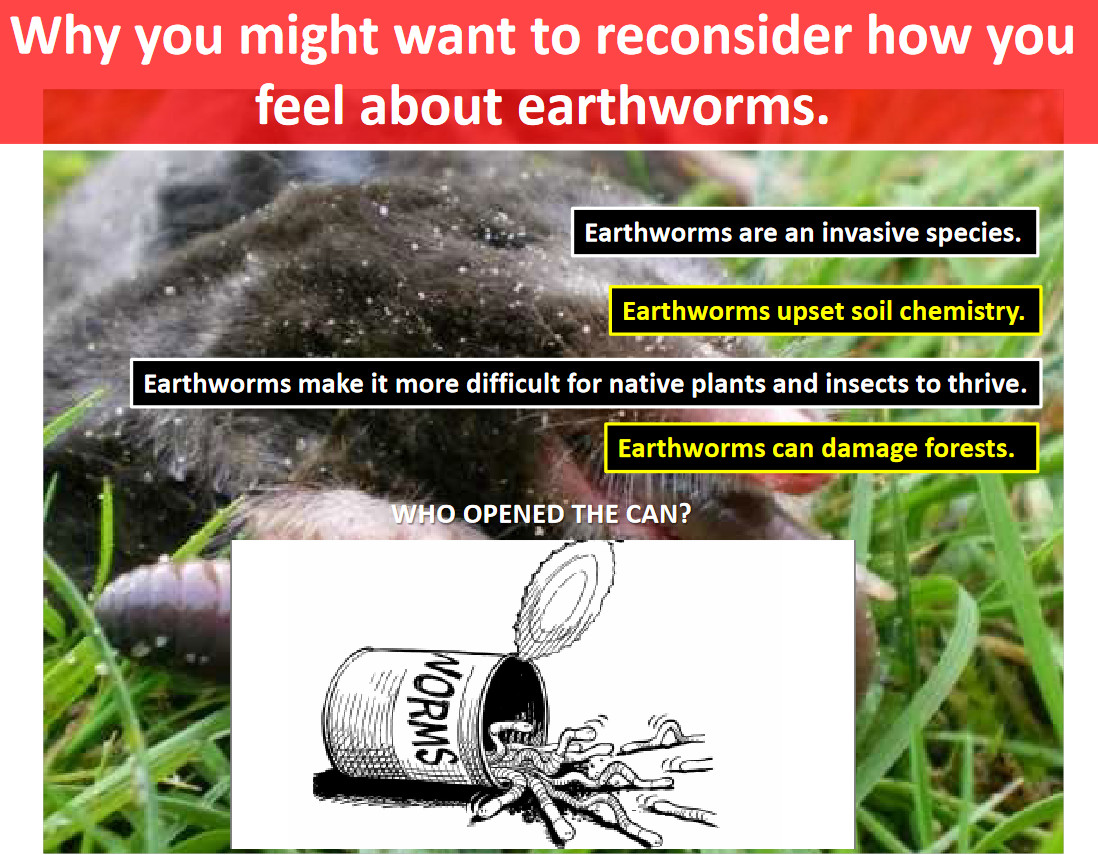
If you bring up or buy earthworms to use as fishing bait, you absolutely should not release them on the ground, since they are not native to New England and they can eat up the leaf litter and disturb the soil. Many native plants, such as lady slippers, require undisturbed soil to live. Prior years' water quality reports, back to the 2011 report, provide a variety of information about earthworm threats.
If you feel you must use worms for fishing, please either use them up or give them to someone else who can use them. Dumping them in the lake is insufficient to dispose of them. Apparently, they can swim to shore and survive. Freezing worms for a few weeks or soaking them in rubbing alcohol (isopropanol) or ethanol (such as vodka) is most effective. Any soil you had the worms in can contain eggs or other life stages, so should also be treated and not be dumped on the ground either. I find the State recommendation to place them in the trash inadequate, as it does not account for the final destination of your trash. Worms might survive a trip to a landfill and escape into the world from there. You only need a few to escape and cause permanent problems. So kill them! The native plants, tree frogs, toads, salamanders, and other little creatures that live in the woods will thank you!
Destructive Wood Pests

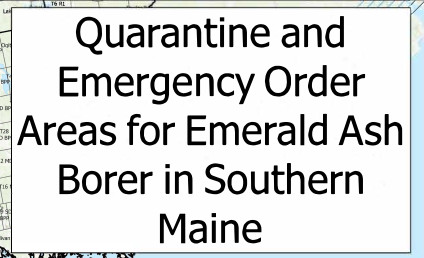
Emerald Ash Borer (EAB) is here. The map linked at right (click the icon), updated 4/15/2026, shows that EAB has arrived and that Province Lake is in the EAB General Infested Area, therefore also in the EAB Quarantine Area. Once EAB arrives, it cannot be erradicated, only managed. If you happen to have a significant number of ash trees on your property, it would be prudent to discuss management issues with a forester NOW, so that the value of timber can be realized before it is lost.
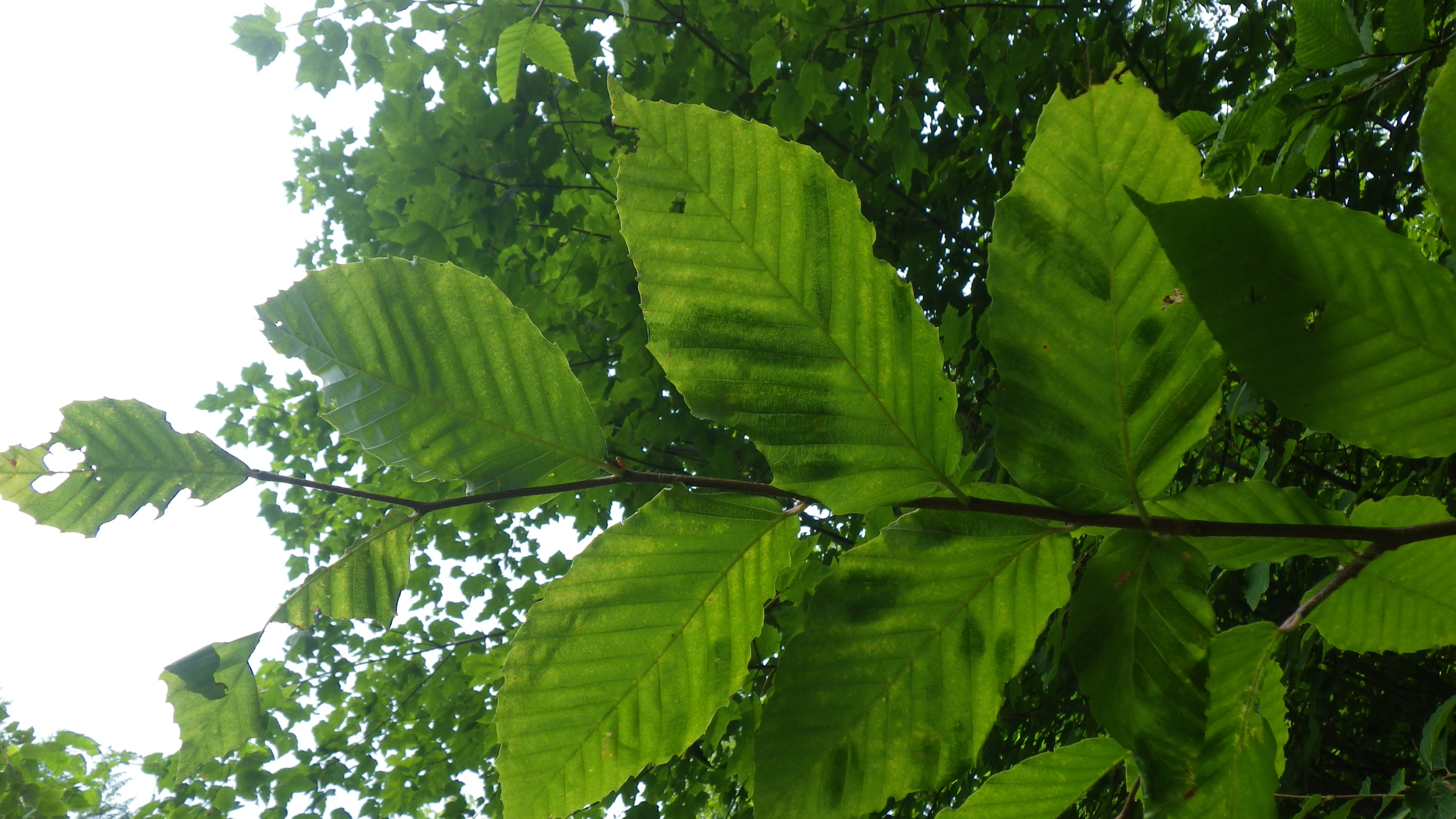
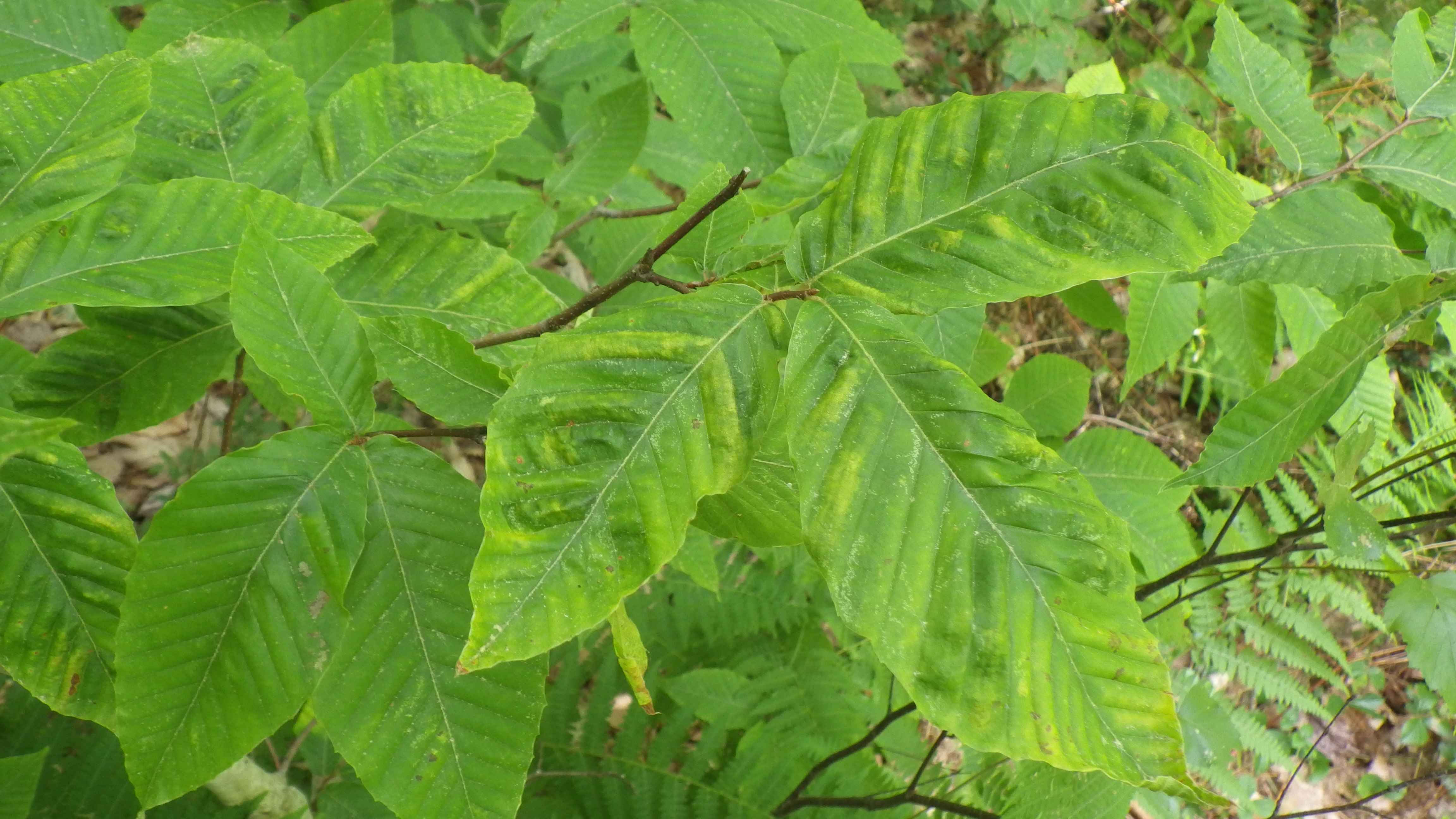
BLD has been moving rapidly north along the coast of New England and has penetrated well inland. Nothing can be done about it except to track its spread. The Cleveland Metroparks tracking project I was helping with using my Beech Leaf Disease Project page has been phased out, so your best bet is to post observations of BLD to iNaturalist. Please still read the page though - there's lots you can learn.
If you have many beech trees on your land, consider hiring a forester to discuss potential actions, such as a harvest or removing those trees that could fall on your buildings or other important areas. Expect all of your beech trees to be dead within a few years, becoming potential physical or fire hazards.
Please always use local firewood, to keep from spreading around EAB and other wood pests. It is illegal to move firewood across most state lines in the Northeast now, and Province Lake is perched on a state line, so be careful to keep out of trouble. See the 2009 report for more details. You can also learn much more at the following web sites:


- NH Bugs - Damaging Insects & Diseases
- Invasive Threats to Maine's Forests and Trees
- Massachusetts Introduced Pests Outreach Project
- "Emerald Ash Borer: Background & Overview of the Green Menace"
Light Pollution is real, with simple solutions.

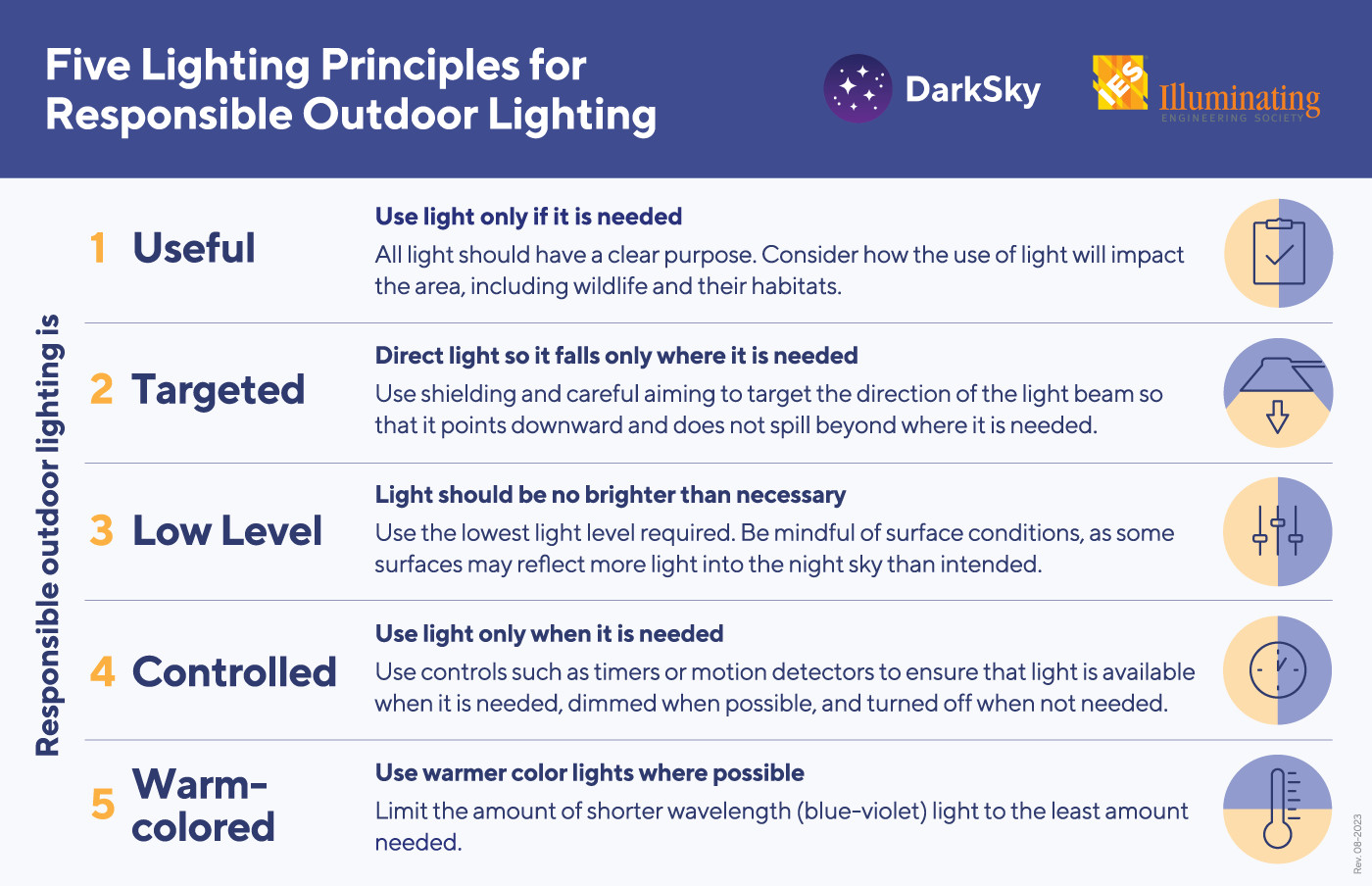
At Province Lake, we are fortunate that we can see the Milky Way. According to the "World Atlas of Artificial Night Sky Brightness", 80% of the world’s population lives under skyglow. Without big commercial or industrial sources of light pollution nearby, is has been up to individual residents to ruin the night views for themselves and everyone else. If you have a beautiful view from your property, please consider that everyone potentially within that area that you can see, can see you back. That is especially so if you live on a mountainside or beside the lake shore. For people in that area, YOU ARE THE VIEW. It is your civic responsibility to minimize your impact on everyone else's view. If security is your concern, there are myriad options to minimize your impact. Lights on motion sensors can startle someone approaching, as well as alerting you that someone is approaching. It is very friendly and not difficult to aim your lights downward or shield your lights so that they do not shine directly into the eyes of anyone beyond your property line or immediately adjacent roadway. Lights off saves you money on your electric bill. Try DarkSky’s Home Outdoor Lighting Assessment.
There is lots more to read on this subject in the 2023 report and many before it, including impacts on wildlife. Darkness is habitat. Habitat destruction is not good for wildlife.
Browntail Moth
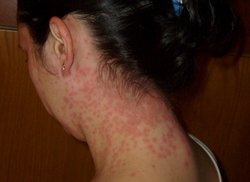

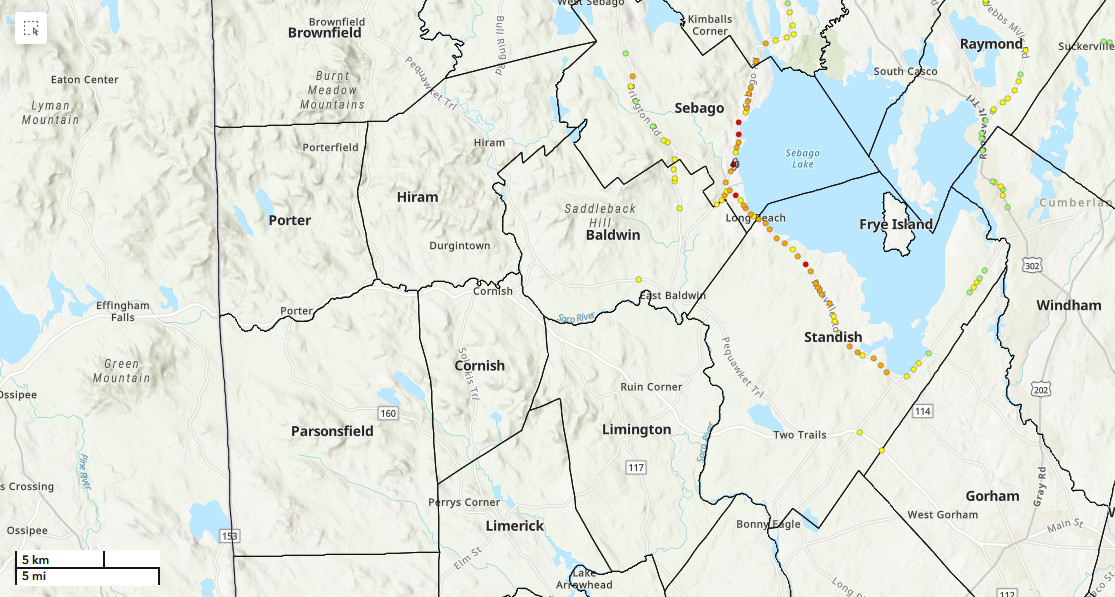
Invasive Browntail Moth caterpillars remain a major problem in Coastal Maine. This is not just the typical problem of being bad for trees, but an actual human health issue since shed hairs cause respiratory distress or poison-ivy type rashes. Province Lake is in the "Alert" area of the 2020 Browntail Moth Risk Map, where no detections had been noted at that time. If you find these caterpillars here, the states want to know. Updated detections from the winter web survey can be seen on the Browntail Moth Interactive Map. The nearest documented detections shown on the map are along the western shore of Sebago Lake in Standish. See the 2018 report for more detailed information. You can learn much more at the following web sites:


Microplastics
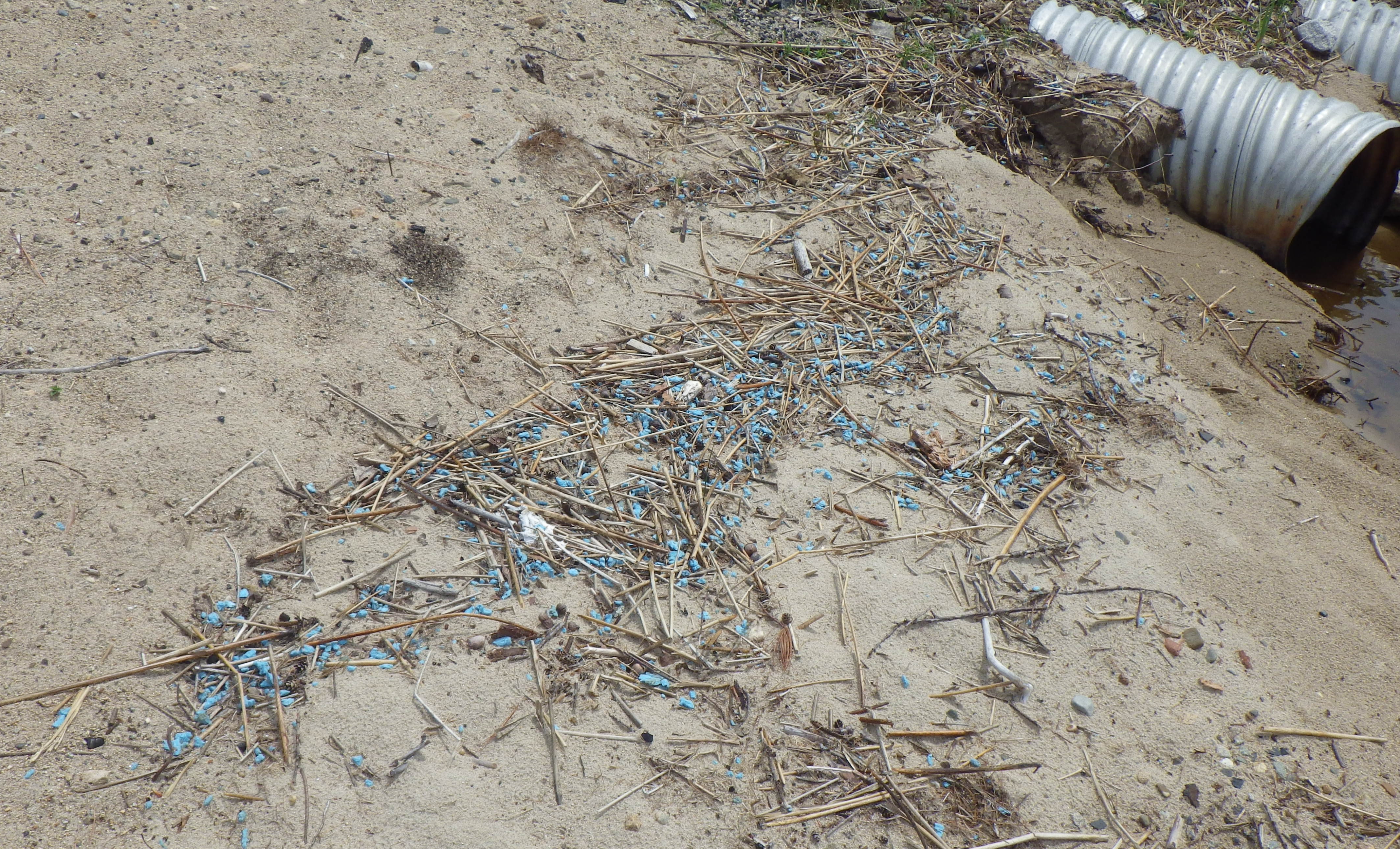
Microplastics 101
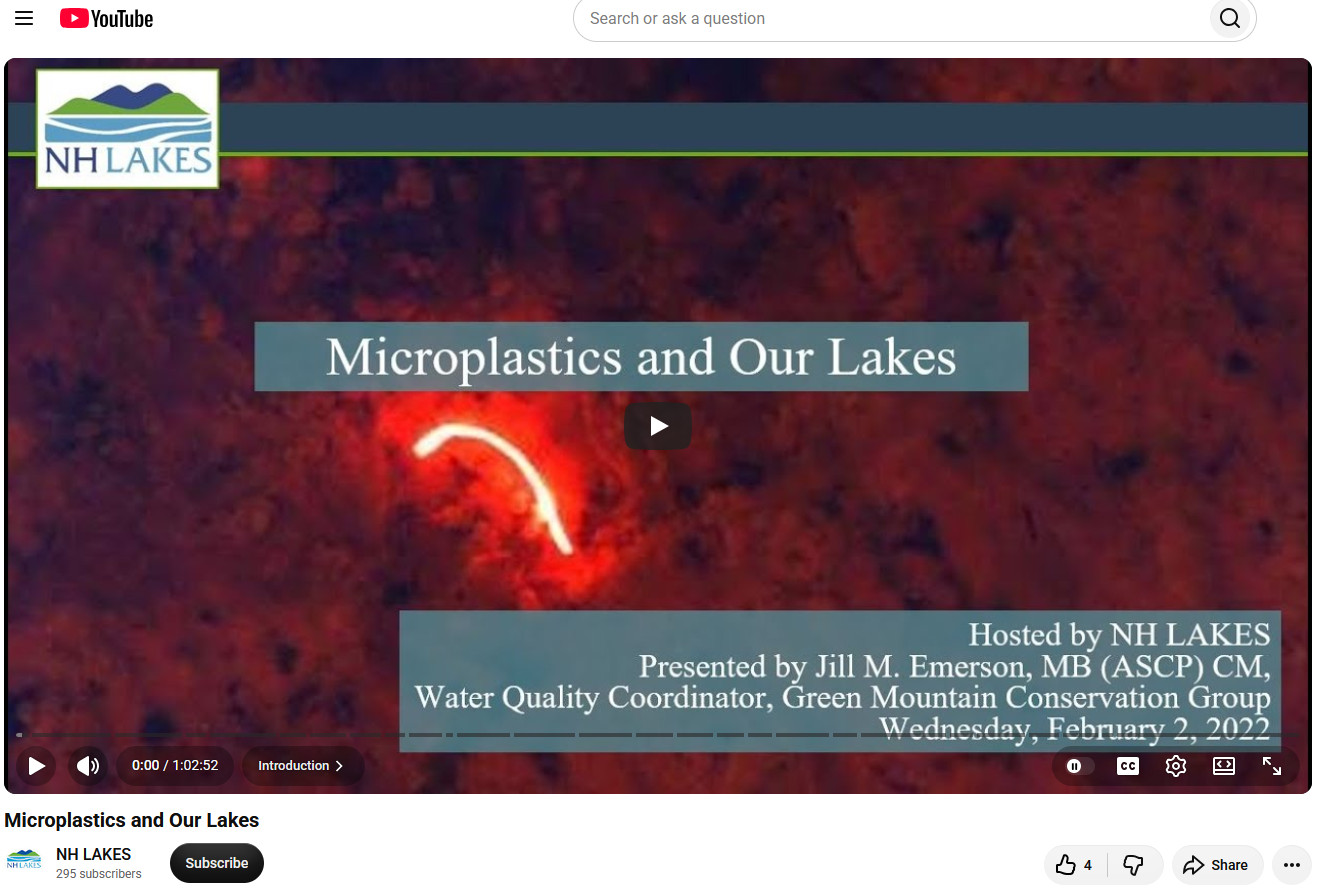


Lest you think that microplastics are mostly an ocean problem, you should know that our local friends at Green Mountain Conservation Group have an ongoing Microplastics Research Program. Jill Emerson of GMCG talks all about it in the video linked at right. While we are not in the Ossipee Watershed, it is my hope that someday Province Lake can also be sampled and have our water analyzed.
Online Resources

I started the Province Lake Water Newsletter in 2013 to cover various topics related to water quality, invasive species, or other issues that have some bearing on the region surrounding Province Lake. I encourage you to sign up for these occasional emails (up to 2 or 3 per year) HERE. Signing up gets you the emailed newsletter only and your information will not be shared with anyone. You can easily unsubscribe or resubscribe at any time.
Last year's water quality report is posted HERE. That is the 2024 report, published online on July 24, 2025. Prior year reports going back to 2009 are also posted online for your reference.
There are now over 3,300 members of the Facebook group called "Province Lake, New Hampshire & Maine" (not affiliated with the any organization), where people interested in the lake and nearby areas can share information.
THANK YOU NOTES: I want to thank Steve Craig for taking the lead on the water sampling activity from 2004 to 2020, after the retirement of Dick Thomas. Steve has also retired from that role and been replaced by Katie Jones since 2021. Thank you, Katie, for taking on this valuable work!
The PLA partners with University of New Hampshire (UNH) Lakes Lay Monitoring Program (LLMP) and Bob Craycraft for the water quality work. PLA members assist in the collection of water samples, including providing boats to access the lake site. PLA membership dues finance the water sampling and lab analysis. Without PLA member support, this work would not be possible.
The PLA can always use more volunteers to help with sampling, etc. I have been given permission to say you are more than welcome to contact the PLA directly at president@provincelake.org if you want to help them with water quality work, weed watching, or anything else. If you contact me (at province-lake-water@cox.net) to express interest in volunteering, I will also pass on your information. You do not need to be a member of the PLA to volunteer, and have no obligation to join if you do volunteer, although new or returned members are always welcome. Dues are used to support efforts to improve lake quality.
On a more personal note, I have been actively involved in recruiting volunteers for citizen science projects in the last few years. Locally, this has included the Province Lake Secchi Club and Frog Watch. The Beech Leaf Disease Project covered the entire northeast U.S. My Dark Sky efforts are meant to encourage people around Province Lake to be better neighbors, protect the wildlife (of all sizes) in their immediate vicinity, cut their carbon emissions, and save themselves money on their electric bills, all at the same time. The difficulty I have found in finding people to help makes me REALLY appreciate the PLA-associated folks who sample the lake and inlets, patrol the lake as Weed Watchers, inspect boats and trailers for hitch-hiking weeds while they are using the boat ramp, maintain the dam, clean up the beaches, serve on the PLA Board, and do other activities that benefit the environment and other folks. Please join me in appreciating them, but better yet, please join them in doing something. We will all be better off for it!
Thanks for your interest,
Norm Dudziak, P.E., I.M.
See Province Lake statistics HERE.
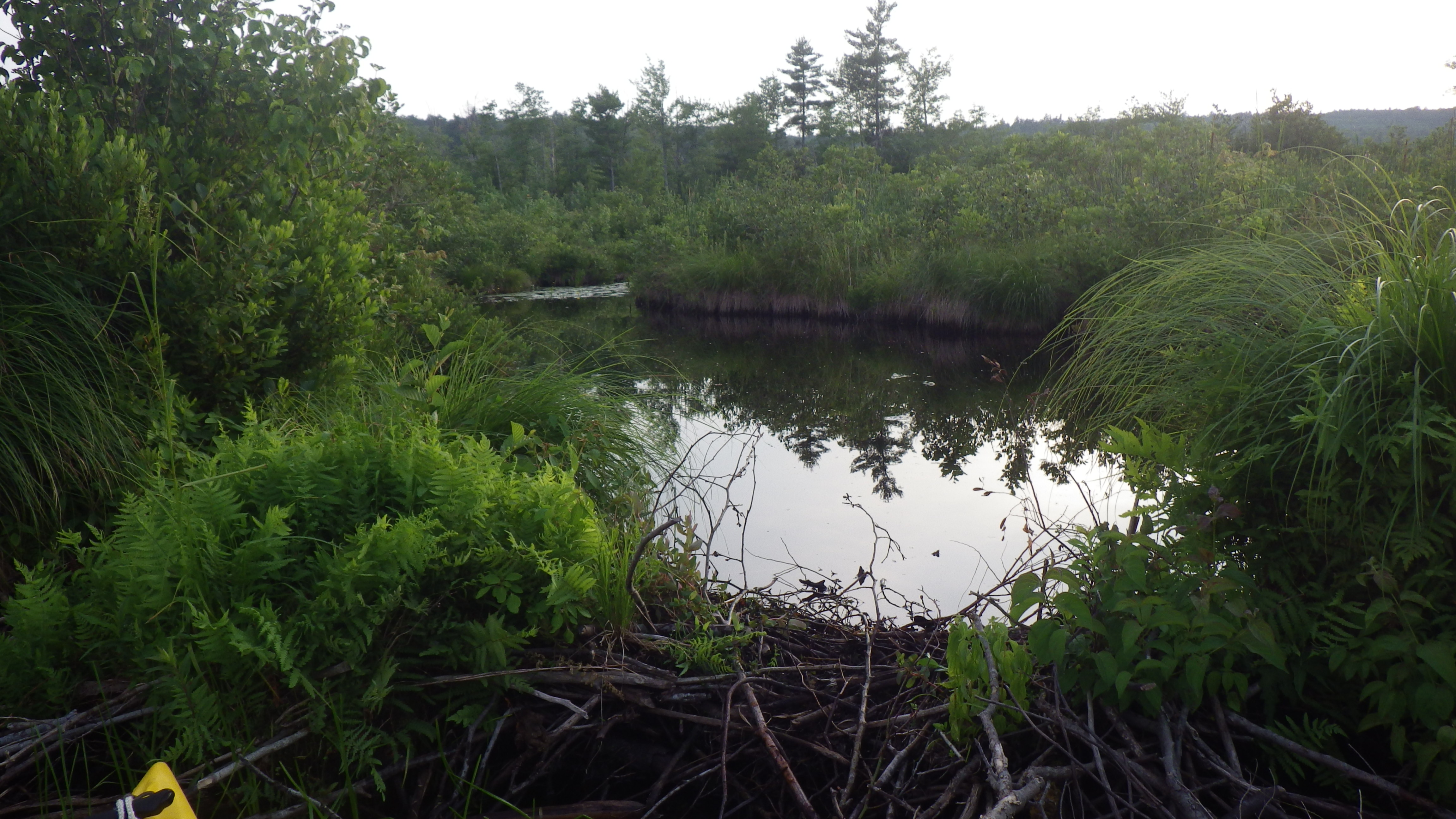
Pond behind beaver dam up Hobbs Brook, July 5, 2026.
Footnotes
- While making the change from VLAP to LLMP had multiple benefits, the downside is that the 23-year continuous record of consistent analyses by VLAP has been broken, so data are not always comparable. See the 2015 report for details of the impact, as specifically described by Sara Steiner, NHDES VLAP Coordinator, and the chlorophyll-a section of the 2021 report for an example. A much bigger impact will be due to the lost year of data from 2020, when no sampling of Province Lake was conducted due to pandemic restrictions and no Secchi readings were taken (for no apparent reason).
- While some still mistakenly use the term "algae" to refer to cyanobacteria, in this report "algae" is only used to refer to true algae. Cyanobacteria are bacteria, not algae; they are not even in the same biological kingdom. Algae are more closely related to YOU than they are to cyanobacteria. Other than both being microscopic cells, they are fundamentally different. See Footnote #2 of 2013 Newsletter #5 for a detailed explanation. I am grateful to see that NHDES is in the process of updating the name of their program to be called the "Cyanobacteria Harmful Algal Bloom Program", with the short version being "The CyanoHAB Team". Progress!
- "Why the limiting nutrient differs between temperate coastal seas and freshwater lakes: A matter of salt"
- Note 3 of the "Final- 2008 List of All Impaired or Threatened Waters" stated "all surface waters in New Hampshire are also included on this list due to statewide fish/shellfish consumption advisories because of mercury levels in fish/shellfish tissue." The 2016 list includes a similar note. This issue is further explained in Question 1 of the 2012 Supplemental Report.
Legal Disclaimer: I am a degreed environmental engineer, licensed in Maine and other states, but my communications on this topic are educational
in nature. Due to my professional engineering licenses, I am required to say that this communication does not constitute engineering work, even when
using my engineering knowledge. I do not speak for anyone but myself, in the form of my company,
E and I Services, LLC.
Terms of Use: Anyone is allowed, even encouraged, to link to this page. However, no one is
authorized by the author
or by E and I Services, LLC to copy the content and post it on another web site.
This web site is owned by E and I Services, LLC and has no affiliation with any other organization.
Copyright © 2026 by E and I Services, LLC. Copyrights apply to photos resident on this web site, except as noted or if the photos are presented
by linkage to another web site. All rights reserved.